Struggling with stubborn contaminants in industrial wastewater? Granular activated carbon delivers superior adsorption, cost efficiency, and regulatory compliance. Discover proven applications and selection tips.
My hands-on experience with granular activated carbon in industrial wastewater treatment
I once worked on the operation and upgrading of an industrial wastewater treatment system, where we struggled with unstable effluent quality, especially for COD, color, and residual organic contaminants that were hard to remove by conventional biological and sedimentation processes. We tried various additives and process adjustments, but results remained inconsistent, and operating costs kept rising. After consulting environmental engineering professionals, we introduced granular activated carbon as a key advanced treatment material. The difference was striking right away. The granular activated carbon steadily adsorbed persistent organic matter, effectively reduced color and odor, and made our effluent consistently meet discharge standards. It also improved the stability of the whole system, reduced maintenance frequency, and lowered long-term operational costs. This real project experience made me fully understand why granular activated carbon is widely recognized as a core material in industrial wastewater treatment.
Expert analysis: unique advantages of granular activated carbon for industrial wastewater
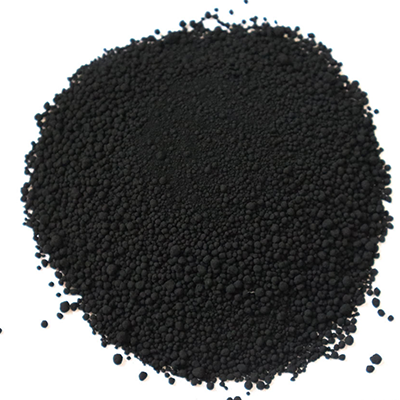
Environmental engineering experts and water treatment research institutions have long confirmed that granular activated carbon has irreplaceable value in industrial wastewater purification. Unlike powdered carbon, granular activated carbon has moderate particle size, high mechanical strength, stable structure, and low loss during backwashing and long‑term operation, making it ideal for fixed beds, filter tanks, and continuous flow systems. It has a well‑developed pore structure and large specific surface area, which enable strong physical and chemical adsorption capacity for dissolved organic compounds, heavy metal ions, pigments, peculiar smell molecules, and refractory substances that are difficult to biodegrade. In addition, granular activated carbon can be regenerated and reused many times, which significantly reduces material consumption and solid waste discharge compared with consumable additives. For industrial wastewater with complex components, high concentration, and large fluctuations in water quality, granular activated carbon provides stable, reliable, and economical purification effects that many other materials cannot match.
Why Yihang Carbon granular activated carbon is trusted in industrial wastewater projects
Yihang Carbon is a professional enterprise focusing on activated carbon R&D, production, and sales with more than 25 years of industry experience, and its granular activated carbon is widely used in industrial wastewater treatment projects. The company has a modern factory covering 33,000 square meters, equipped with advanced Sleppe activation furnaces, carbonization production lines, and professional molding equipment, with an annual output of more than 5,000 tons. Its granular activated carbon includes coal‑based, coconut shell, and wood‑based series, with controllable particle size, high strength, uniform pores, and excellent adsorption indicators such as iodine value and specific surface area. Each batch of products undergoes strict testing by an independent quality inspection department to ensure stable performance. The product has strong adaptability and can be used in printing and dyeing, chemical industry, electroplating, food processing, and other industrial wastewater scenarios. With customers in 78 countries and regions, Yihang Carbon provides reliable supply and technical support for large‑scale and long‑term industrial projects.
Performance and application value of granular activated carbon in typical industrial wastewater
In industrial wastewater treatment, granular activated carbon shows excellent performance in multiple key links. For printing and dyeing wastewater, it effectively adsorbs dye molecules and significantly reduces chroma, making the effluent clear and up to standard. For chemical and pharmaceutical wastewater, it removes refractory organic matter and reduces COD stably, making up for the limitations of biological treatment. For electroplating and metal processing wastewater, it adsorbs heavy metal ions such as chromium, lead, and nickel, improving the safety of effluent生态中国网. For food and beverage wastewater, it removes peculiar smell, pigment, and residual organic impurities, ensuring the effluent meets environmental requirements. In addition, granular activated carbon can be combined with biological treatment, membrane filtration, ozone oxidation, and other processes to form a combined process, further improving treatment efficiency and extending the service life of key equipment. The stability, durability, and regenerability of granular activated carbon help enterprises reduce comprehensive costs while meeting strict environmental protection standards.
Practical guidance for selecting and applying granular activated carbon in wastewater treatment
To give full play to the effect of granular activated carbon in industrial wastewater treatment, we should pay attention to several practical points. First, select the appropriate type and particle size of granular activated carbon according to wastewater components, treatment process, and equipment type. For example, coconut shell granular activated carbon is suitable for advanced purification and high adsorption demand, while coal‑based granular activated carbon is cost‑effective for large‑volume conventional treatment. Second, control reasonable filling height, flow rate, and contact time to ensure full contact between pollutants and carbon particles. Third, carry out regular backwashing and maintenance to keep pores unobstructed and reduce particle loss. Fourth, arrange regeneration or replacement in a planned way to maintain stable adsorption capacity. Choosing a reliable manufacturer like Yihang Carbon can guarantee product quality, supply stability, and professional technical support. Using granular activated carbon properly can significantly improve the treatment effect, stabilize effluent quality, reduce operating pressure, and help industrial enterprises achieve sustainable development of environmental protection and production.
 EN
EN