Discover how activated carbon enhances air purification efficiency by capturing 90% more pollutants. Learn the science behind its adsorption power and why it's essential for industrial applications. Explore solutions now.
Activated Carbon's Impact on Air Purification Efficiency
Modern systems for purifying air have grown increasingly complex and efficient due to activated caron’s versatility in filtering even the most elusive airborne contaminants surviving the first phase of filtration. While HEPA filters are geared towards particulate matter, activated carbon works towards the removal and adsorption of gaseous pollutants, odors and volatile organic infecting the indore/outdoor air. Unlike the rest of the contaminants, these pollutants tend to be invisible to the naked eye, the reason activated carbon air purifiers, HVAC systems and other industrial scrubbers are so effective in amplifying purification performance. This article aims at outline the various ways and extent to which activated carbon aids in the urification of air and its proved determinace of its effectiveness.
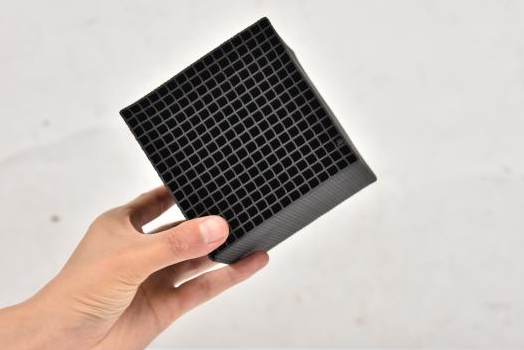
Adsorption Mechanism for Gaseous Contaminants
The reason why activated carbon improves air purifier efficiency, more than anything else, is because of its unique `adsorption` ability on gas pollutants. During the high temperature activation processes, activated carbons develop a microscale arrangement of pores, which results in the surface area of activated carbon reaching 100's of square meters per gram. When carbon beds are utilized, contaminated air is passed through the beds, and the gas phase molecules are attracted to the pores of the carbons through biotranfer. This process is mostly used for polluted air which has VOCs like toluene cleaning products, formaldehyde in fuels and paints, and more. Other gas pollutants that the process can remove are ammonia and sulfur dioxide. When the air is saturated, then the carbon structure won't undergo any changes and will not leave any by-products because no chemical reactions will occur.
Targeted Removal of Volatile Organic Compounds (VOCs)
Exposure to VOCs in the air has been known to irritate the respiratory system and create other long-term complications due to the ability of these substances to bypass common filters. This refined VOCs filtration problem is solved by the activated carbon which is known to efficiently adsorb VOCs. This makes it an excellent air filter alternative in new constructions, printing offices, and other VOC-rich environments. Activated carbon air filters have been proven to remove VOCs of all molecular sizes and polarities due to their distinctive porous structure. For example, formaldehyde and xylene of molecular weights 30.03 g/mo and 106.16 g/mol, respectively, are captured by micropores and mesopores of < 2 and 2-50 nanometers, respectively. Such dependable and fast adsorption is the reason air filters with activated carbon perform better than air filters with normal mesoporous filters.
Elimination of Odors and Foul Smells
Foul, even troublesome, smells are often caused by gaseous compounds like hydrogen sulfide (what rotten eggs smell like), mercaptan (what sewage smells like), and even certain volatile fatty acids (smells associated with certain cooking smells), and are a major headache for both residential and commercial air quality, especially for food establishments and even waste management facilities. The efficacy and comfort of air quality is improved by using activated carbon, which considerably purifies, and even removes, troublesome, pesky, and sometimes odorous compounds within air. The smell-causing molecules are captured, and instead of simply masking them, they are neutralized, which is the result of the high-surface area and porous microstructure of the activated carbon. In kitchen air purifiers, for example, cooking and food odors and even cooking fumes are often present. In pet friendly homes, ammonia from urine, dander-related odors and even pet urine are captured. The Odor-removal feature distinguishes activated carbon as an essential element in air purifiers. This is mainly because it fulfills the need for users which particulate filters fail to do.
Complementary Role with Particulate Filtration
The particle filters (like HEPA filters) work more effectively when used alongside activated carbon filters which eases the system's workload. HEPA filters capture airborne particles like dust, pollen, mold spores, and pet dander, and these filters HEPA filters are still unable to cope with VOCs and gasses. This is where the combination of activated carbon and HEPA filters shine, as they will remove both particulate and gaseous contaminants which could be particularly useful for someone's health. An instance of this would be the configuration of the filters used in residential purifiers. The air first passes through the pre-filter which captures bigger particles, which is followed by an activated carbon filter which then gets adsorbed with the Carbon filter. Last in line is the HEPA filter which captures fine particles. The combination of all of these filters should be able to remove the most common faunal contaminants as a greater class of a filter, which will work much more effectively than a singular filter.
Enhancement of HVAC System Performance
Using activated carbon in air conditioning units significantly optimizes their air purification effectiveness. Since HVAC units comprise of filters that extract volatile organic compounds (VOCs), smoke, and odors from air, these filters prevent the recirculation of contaminants. Ohter gasses such as corrosive gasses that could quickly corrode and damage coils and fans of the air conditioning units are also absorbed, leading to better energy efficiency and longer system lifespans.
Industrial Air Purification Applications
Activated carbon is proven useful in areas with heavy air pollution. An example of such is purification. In chemical painting industries, activated carbon is filled in the air scrubbers. It removes chemical vapors, toxic gasses, volatile organic compounds, and hazardous industrial smoke. It also protects the workers and the environment.
Apart from the vapors and chemical emissions, chemical exhaust in the chemical industry also contains harmful substances like chlorine and hydrogen chloride. Activated carbon scrubbers remove such harmful compounds, creating emissions safe for the environment. These systems also improve the workplace air. In many countries, there's strict regulation for handling large volumes of contaminated air. Substantial improvement in the workplace air quality increases compliance with such policies.
Factors Influencing Activated Carbon's Efficiency
Activated carbon has factors which impacts its ability to improve efficiency in purification like type of carbon used, internal pores, time of contact, and moisture in the air. Volume of the activated carbon granules used in air conditioners is GAC because of its high retention capacity and long life. PAC is used in small air purifiers because of its faster retention capacity. The function of the pores is also important—carbon that has a higher percentage of micropores is better at capturing small VOCs, while more mesopores is better at larger molecules. Contact time is also important—timed contact of air flowing through the carbon bed. Efficiency improves purification contact time, the air is less.
Excess moisture needs to be removed to increase efficiency because the humidity scavenges the vapor pollutants. Drying processes are used in these cases because they can increase the retention efficiency and above the dew point the vapor ratio is diffusion limited.
Maintenance for Sustained Efficiency
In order to maintain the efficiency of an air purifier, proper upkeep of the carbon components is crucial. Over time, the carbon adsorbers are contaminated and subsequently lose their capacity to adsorb. Depending on the concentration of pollutants and the velocity of airflow, the lifespan of an air purifier is about 3 to 6 months. Industrial/GAC systems on the other hand tend to function for a significantly longer time period until scrubbing is required. Heat scrubbing is a to be an inexpensive method of renewing spent carbon, and it can be a cost effective method for an industrial carbon bed user. For the average household user, it is best to keep to the prescribed schedule to maintain effectiveness. Filters contaminated beyond a certain point lose the ability to retain gases and odors.

 EN
EN