Request a Quote

Please fill out the consultation form below. We will contact you within 1 hour and provide professional services.
Email
Name
Mobile/WhatsApp
Message
0/1000

Chlorine and Chloramine in Municipal Drinking Water: Why They Exist and How to Remove Them Effectively ?

Jun 15,2026

Municipal drinking water generally uses chlorine and chloramine as disinfectants to eliminate harmful microorganisms. Chlorine is efficient and low-cost yet unstable, while chloramine features better stability and longer-lasting disinfection effect but is far harder to remove. Their residues cause unpleasant taste and odor, generate harmful disinfection by-products and damage precision water treatment equipment, failing to meet the strict water quality requirements of food, pharmaceutical, electronics and other industries. Coconut shell activated carbon delivers excellent adsorption and catalytic reduction performance to effectively remove residual chlorine and chloramine from water. In particular, catalytic coconut shell activated carbon works remarkably well on chloramine. Boasting high hardness and long service life, it is widely applied in municipal water purification, industrial water treatment, household water filters and aquaculture systems, serving as an efficient and cost-effective solution to eliminate chlorine-based residues, improve water quality and protect water treatment facilities.

Chlorine and chloramine are mainly found in municipal drinking water systems where disinfectants are used to ensure microbiological safety. While these disinfectants play a critical role in protecting public health, their residual presence in drinking water can lead to taste issues, odor problems, and operational challenges in water treatment systems.

In this article, we will explain why chlorine and chloramine are used in municipal water systems, their impacts, and the most effective solution for their removalcoconut shell activated carbon.

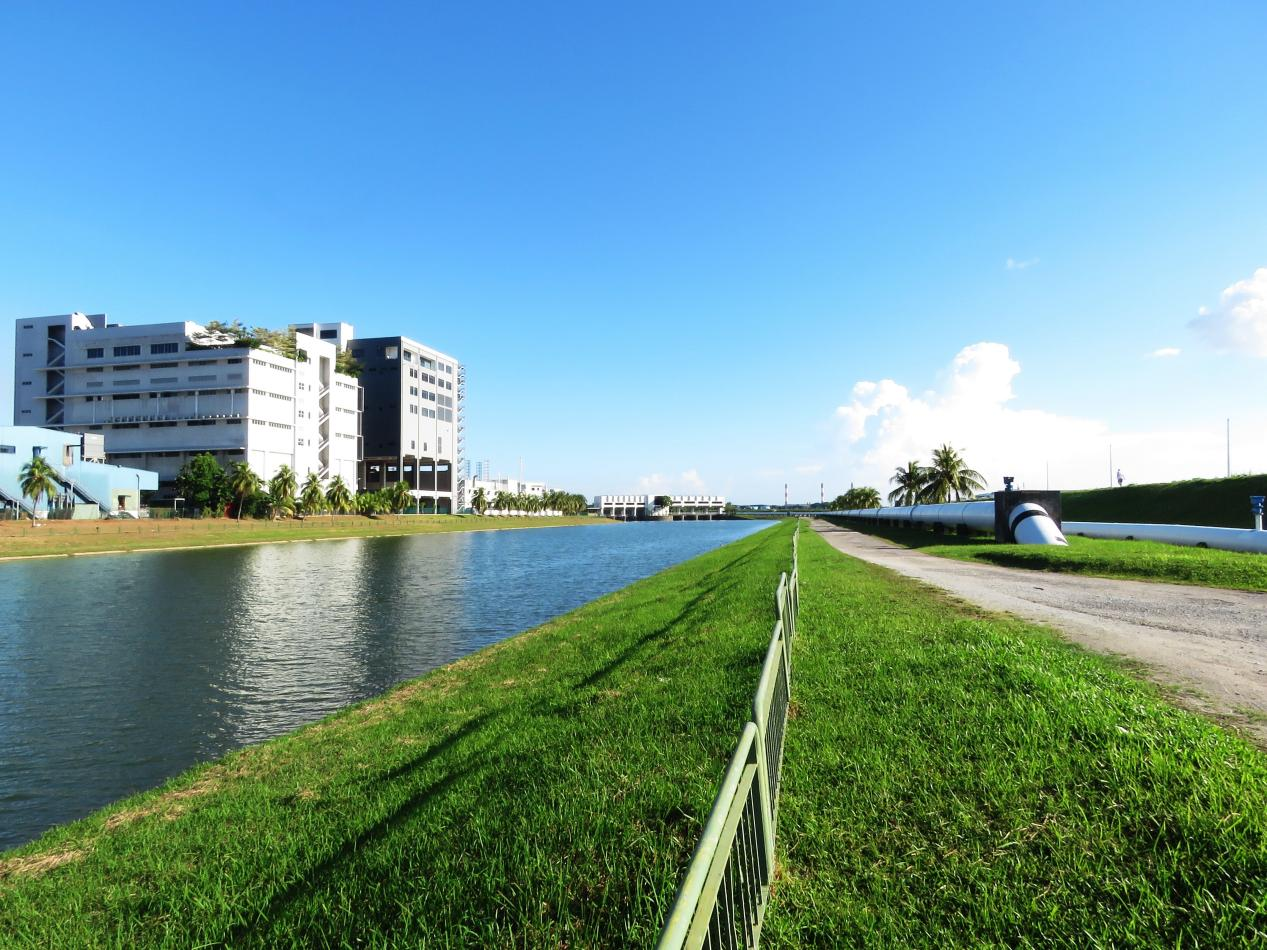
Chlorine and Chloramine in Municipal Drinking Water-Urban water purification.png 

Why Municipal Water Systems Use Chlorine and Chloramine?

Municipal water treatment plants must ensure that water is free from harmful microorganisms such as bacteria, viruses, and parasites before it reaches consumers.

1. Chlorine (Free Chlorine)

Chlorine is widely used because it is:

  • Highly effective for rapid disinfection
  • Cost-efficient
  • Easy to apply in large-scale systems

However, chlorine is unstable and can dissipate during water distribution, especially in long pipelines.

2. Chloramine (Combined Chlorine)

To solve chlorines instability, many utilities use chloramine, formed by combining chlorine with ammonia.

Advantages of chloramine include:

  • Longer-lasting disinfection in pipelines
  • More stable residual protection
  • Lower formation of some disinfection by-products

However, chloramine is significantly more difficult to remove from water compared to free chlorine.

Problems Caused by Chlorine and Chloramine in Water

Although necessary for safety, residual chlorine and chloramine can create several issues in drinking water systems and industrial applications.

1. Unpleasant Taste and Odor

  • Chlorine often causes a bleach-likesmell
  • Chloramine can produce a medicinal or chemical taste

2. Damage to Sensitive Equipment

Residual oxidants may:

  • Oxidize RO membranes
  • Reduce lifespan of filtration systems
  • Affect ion exchange resins

3. Formation of Harmful By-products

Chlorine can react with organic matter to form disinfection by-products (DBPs), which are a concern in drinking water quality management.

4. Difficulty in Industrial Applications

Industries such as:

  • Food & beverage production
  • Pharmaceutical manufacturing
  • Electronics and semiconductor processing

require chlorine-free or ultra-low chlorine water quality.
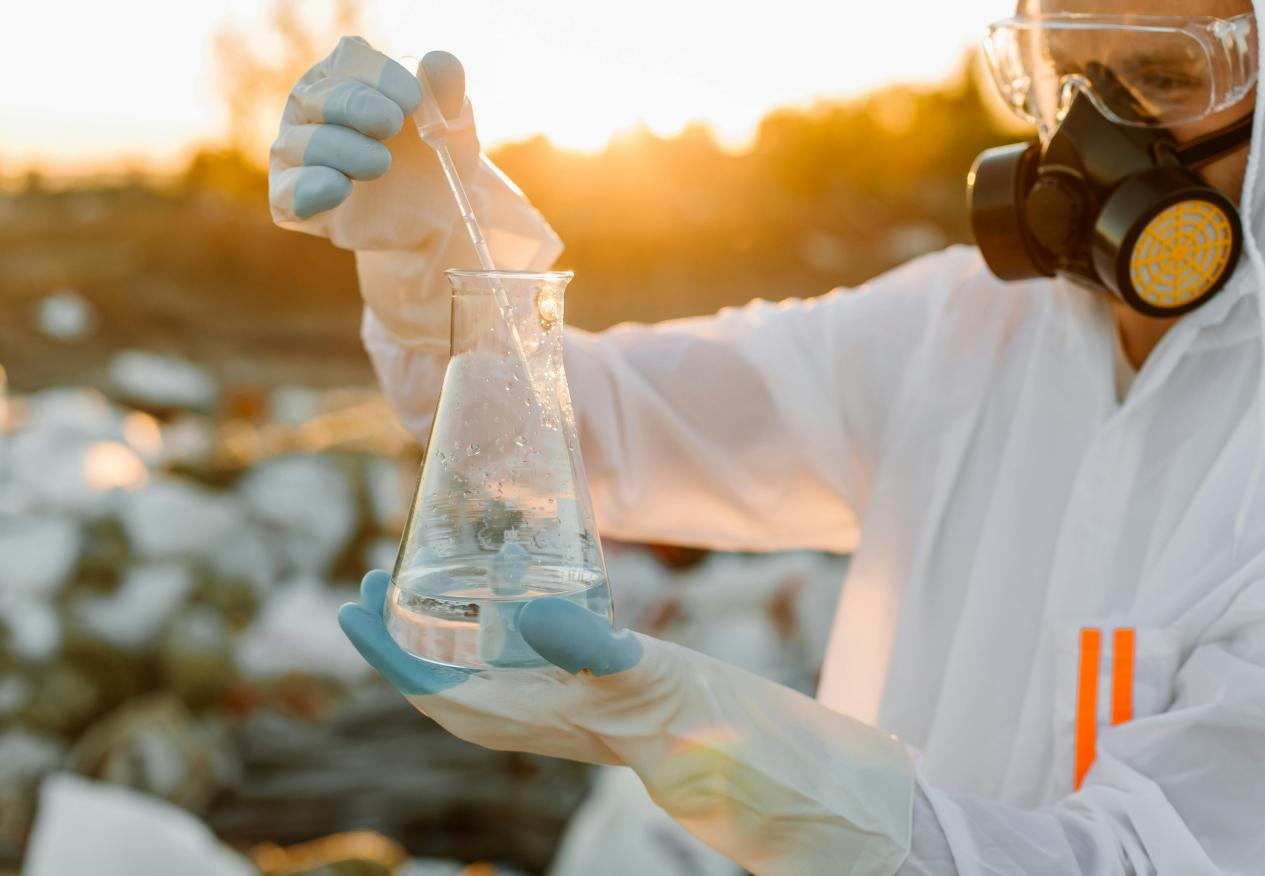
Testing for ammonia and chlorine in urban drinking water.png

Why Chloramine Is More Difficult to Remove Than Chlorine?

Chlorine can be removed relatively easily through adsorption and catalytic reduction. However, chloramine is:

  • More stable chemically
  • Less reactive with standard activated carbon
  • Requires longer contact time or catalytic media

This makes proper filtration design extremely important.

Coconut Shell Activated Carbon: The Most Effective Solution

Coconut shell activated carbon is widely recognized as one of the most efficient materials for removing chlorine and chloramine from water.

1. High Adsorption Capacity

Its microporous structure provides a large surface area, allowing fast and efficient adsorption of oxidants and organic compounds.

2. Effective Chlorine Removal

Chlorine is removed through catalytic reduction on the carbon surface, converting it into harmless chloride ions.

Benefits include:

  • Improved water taste
  • Elimination of bleach odor
  • Protection of downstream equipment

3. Enhanced Chloramine Reduction (Catalytic Grade Carbon)

Specially treated catalytic coconut shell activated carbon improves chloramine removal efficiency by accelerating decomposition reactions.

It is ideal for:

  • RO pre-treatment systems
  • Municipal water polishing
  • Beverage and food water treatment
  • Aquarium and aquaculture systems

4. High Hardness and Long Service Life

Compared with coal-based carbon, coconut shell activated carbon offers:
  • Higher mechanical strength
  • Lower dust generation
  • Longer operational lifespan

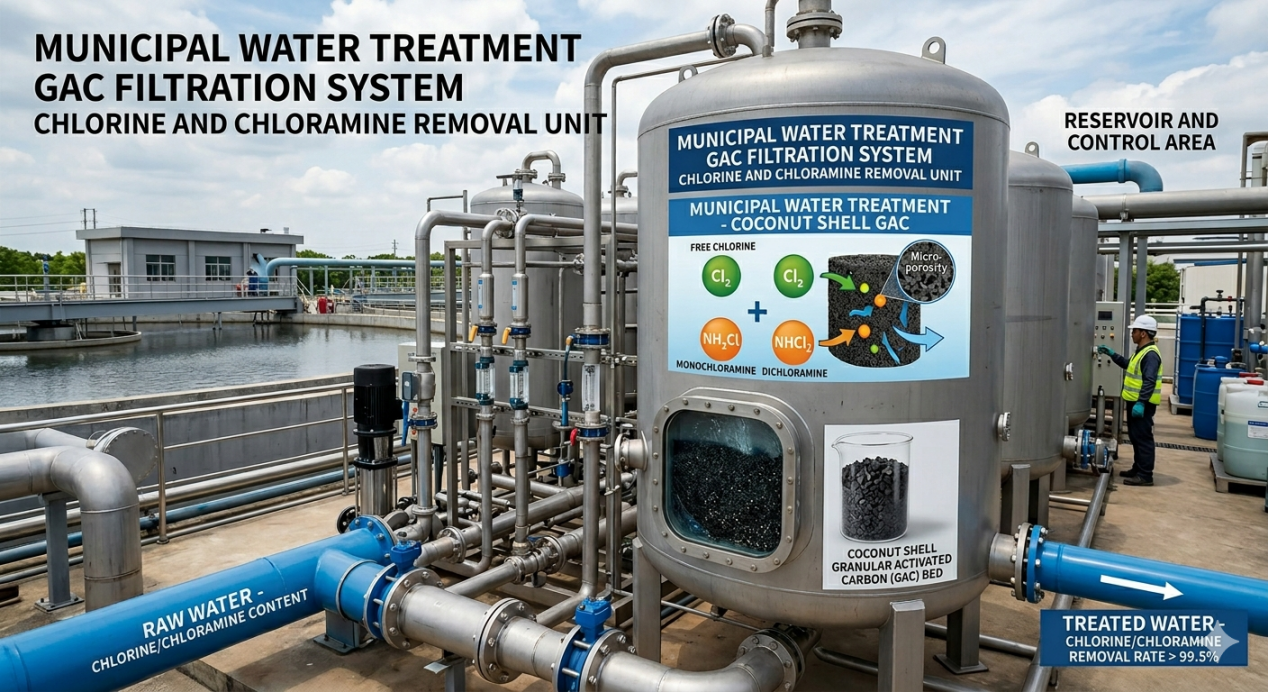
City drinking water activated carbon water purification equipment.png

Applications in Water Treatment Systems

Coconut shell activated carbon is widely used in:

  • Municipal water purification plants
  • Reverse osmosis (RO) pre-treatment systems
  • Residential drinking water filters
  • Industrial process water systems
  • Food & beverage production
  • Pharmaceutical water systems
  • Aquaculture and aquarium filtration

Typical Water Treatment Process for Chlorine and Chloramine Removal

A common system design includes:

  • Sediment filtration (sand/multimedia filter)
  • Activated carbon filtration (chlorine & organics removal)
  • Fine filtration (cartridge filter)
  • RO membrane system (if required)

Activated carbon is a critical step to protect downstream membranes and improve water quality.
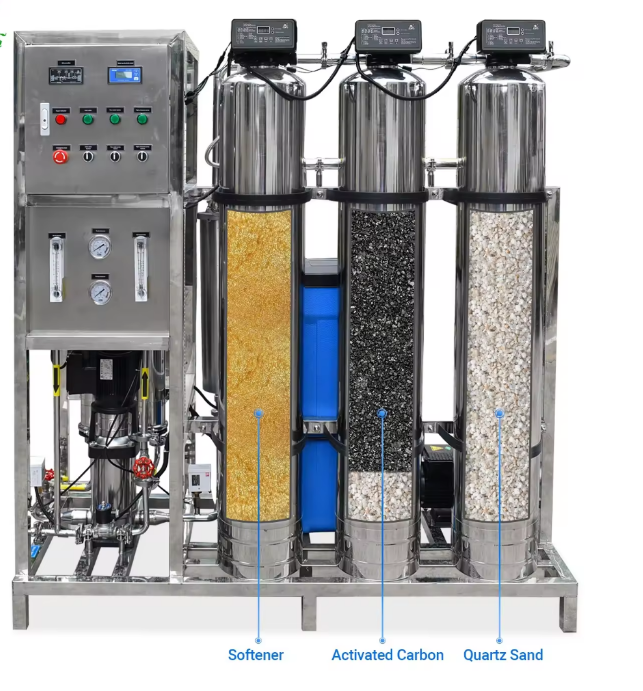
City drinking water activated carbon water purification equipment 02.png

How to Choose the Right Activated Carbon

When selecting activated carbon for chlorine and chloramine removal, key parameters include:

  • Iodine number (adsorption capacity)
  • Hardness (mechanical durability)
  • Surface area (microporosity)
  • Catalytic activity (for chloramine removal)
  • Ash content (purity level)

For chloramine-heavy systems, catalytic coconut shell activated carbon is strongly recommended.

Conclusion

Chlorine and chloramine are essential disinfectants in municipal drinking water systems, but their residual presence can negatively impact taste, odor, and industrial water performance.

Coconut shell activated carbon remains one of the most reliable and efficient solutions for removing these compounds. With high adsorption capacity, strong catalytic performance, and long service life, it is widely used in modern water treatment systems worldwide.

If you are looking for a stable and high-performance solution for chlorine and chloramine removal, coconut shell activated carbon is a proven and cost-effective choice.


WeChat WeChat
WeChat
Phone Phone Email Email WhatApp WhatApp TopTop

Request a Quote

Please fill out the consultation form below. We will contact you within 1 hour and provide professional services.
Email
Name
Mobile/WhatsApp
Message
0/1000