Sep 04,2026
In the edible oil industry, maintaining product purity and safety is becoming increasingly important. During the refining, processing, storage, and transportation of vegetable oils and fats, certain unwanted contaminants may enter the oil and affect its quality, compliance, and marketability.
Among the contaminants receiving particular attention are polycyclic aromatic hydrocarbons (PAHs), mineral oil saturated hydrocarbons (MOSH), mineral oil aromatic hydrocarbons (MOAH), dioxins, and PCB-related compounds.
For oil processors looking for an efficient purification solution, steam-activated carbon powder has become an important adsorption material for refining and decontamination applications.
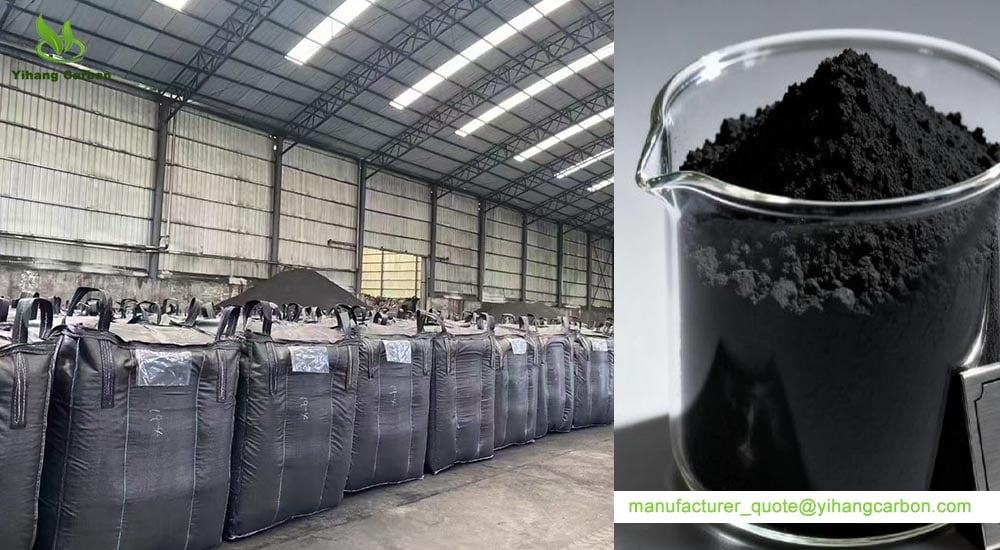
Steam-activated carbon powder is produced by activating carbonaceous raw materials with steam at high temperatures. This activation process develops a highly porous internal structure, creating a large surface area and a network of micropores and mesopores.
These pores enable activated carbon to adsorb a wide range of undesirable organic compounds from liquids.
Compared with ordinary carbon materials, properly manufactured activated carbon for edible oil processing is designed with controlled pore structure, high adsorption capacity, low impurity levels, and suitability for food-processing applications.
For this reason, powdered activated carbon can be incorporated into specific refining and purification processes where the removal of trace contaminants is required.
Edible oils and fats may be exposed to different sources of contamination during raw material production, thermal processing, environmental exposure, transportation, or storage.
PAHs
Polycyclic aromatic hydrocarbons (PAHs) are a group of compounds that can be generated through incomplete combustion and may be associated with certain agricultural, environmental, or thermal processing conditions.
Because PAHs can be present at very low concentrations, effective adsorption and purification technologies are important when oil processors need to control their levels.
MOSH and MOAH
MOSH and MOAH refer to groups of hydrocarbons that may originate from mineral oil contamination.
MOSH mainly consists of saturated hydrocarbons, while MOAH contains aromatic hydrocarbons. They can potentially enter food products through lubricants, processing equipment, packaging materials, environmental contamination, or other sources.
As the edible oil industry places greater emphasis on contaminant monitoring, controlling MOSH/MOAH has become an important consideration in modern refining processes.
Dioxins and PCB Furans
Dioxins and certain PCB-related compounds are persistent environmental contaminants that may accumulate in certain raw materials, particularly those of animal or environmental origin.
Their removal can be technically challenging because they may occur at trace concentrations. Adsorption using specially selected activated carbon is therefore considered as one of the approaches that can be incorporated into appropriate purification processes.
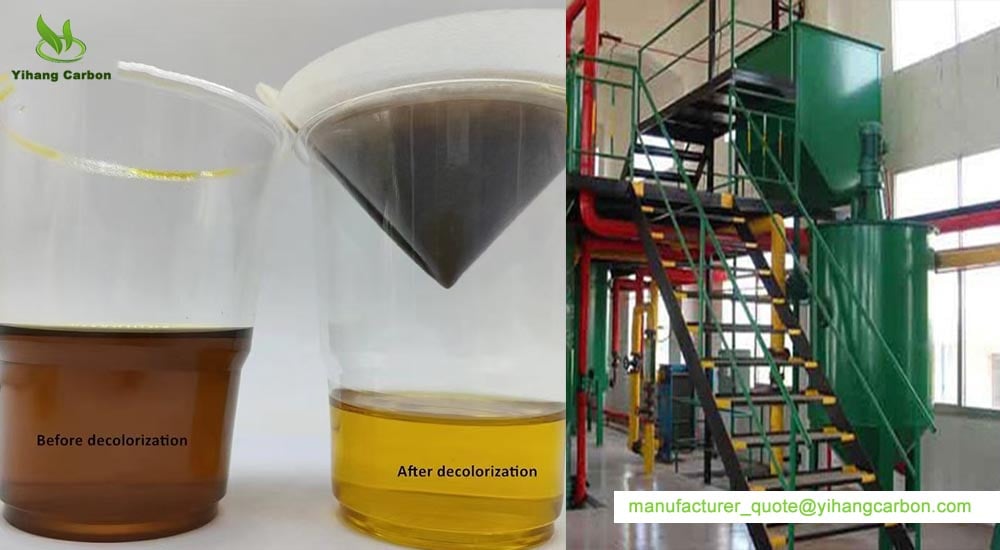
The primary function of activated carbon is adsorption.
When contaminated oil comes into contact with activated carbon, undesirable molecules can migrate from the oil phase onto the internal surface of the carbon particles.
The effectiveness of this process depends on several factors, including:
For this reason, selecting activated carbon solely based on iodine number is not always sufficient for specialized edible oil purification applications.
A properly designed product should be evaluated according to the actual contaminants, oil type, process conditions, and desired removal performance.
30 years manufacturing. MOQ 1 ton. Free samples. Reply within 1 hours.
Powdered activated carbon offers several advantages in liquid-phase purification.
Its fine particle size provides a large contact area and can promote rapid interaction between the carbon and contaminants in the oil.
For edible oil applications, powdered activated carbon can be introduced at an appropriate stage of the refining process and then separated from the treated oil using suitable filtration equipment.
This makes PAC particularly attractive when the objective is to remove trace organic contaminants during oil purification rather than simply performing general decolorization.
A Specialized Material for Edible Oil Processing
Not all activated carbons are suitable for food-related applications.
Activated carbon intended for edible oils should be manufactured under controlled conditions with particular attention to:
High purity:
Low levels of undesirable inorganic impurities and other contaminants are important for food-processing applications.
Controlled pore structure:
The pore distribution should be appropriate for the adsorption of the target compounds.
Suitable particle size:
Fine powdered material can provide efficient contact with the oil phase.
Consistent quality:
Stable performance between production batches is important for industrial oil-processing operations.
Application-specific design:
Different oils and contaminants may require different activated carbon characteristics.
For this reason, food processors and edible oil manufacturers should work with an activated carbon supplier capable of providing application-oriented recommendations rather than a one-size-fits-all carbon grade.
Applications in Edible Oils and Fats
Steam-activated carbon powder can be considered for purification applications involving a variety of edible oils and fats, depending on the refining process and target contaminants.
Potential applications include the treatment and purification of:
The appropriate activated carbon grade and treatment conditions should be determined according to the specific oil and contamination profile.
When sourcing activated carbon for advanced edible oil purification, buyers should consider more than just price.
Important technical questions include:
1. What contaminants need to be removed?
PAHs, MOSH/MOAH, dioxins, and PCB-related contaminants have different molecular characteristics. The adsorption target should therefore be clearly identified.
2. What is the initial contamination level?
Understanding the concentration before treatment helps determine the required carbon dosage and process conditions.
3. What is the required outlet specification?
A clear target is essential for evaluating whether the activated carbon is suitable.
4. What type of oil is being treated?
Different oils have different compositions and may influence adsorption performance.
5. What are the operating conditions?
Temperature, contact time, agitation, filtration method, and carbon dosage all influence actual results.
6. What food-grade documentation is required?
Depending on the destination market and application, buyers may require appropriate certificates, declarations, test reports, or other compliance documents.
Why Application Testing Matters
Laboratory testing and pilot trials can be extremely valuable before full-scale adoption.
A carbon that performs well for general decolorization may not necessarily provide the same performance for specific contaminants such as PAHs, MOSH/MOAH, dioxins, or PCB furans.
A proper evaluation can help determine:
This approach allows oil processors to select the most appropriate carbon grade based on actual process requirements.
For edible oil manufacturers, activated carbon is not simply a commodity product. The consistency of raw materials, activation process, pore structure, purity, particle size, quality control, and technical support can all affect the final purification performance.
An experienced supplier should be able to discuss your application in detail and recommend a suitable powdered activated carbon based on:
Oil type + contaminant type + initial concentration + target concentration + process conditions + required documentation
This application-based approach can help reduce unnecessary carbon consumption and improve the overall efficiency of the purification process.
As the edible oil industry continues to focus on food safety and contaminant control, effective purification technologies are becoming increasingly important.
Steam-activated carbon powder provides a versatile adsorption solution for specialized edible oil and fat purification applications, particularly where the control of contaminants such as PAHs, MOSH/MOAH, dioxins, and PCB-related compounds is required.
The key to successful application is not simply choosing activated carbon with a high adsorption index, but selecting a food-suitable, application-specific carbon with the right pore structure, purity, particle size, and adsorption characteristics.
For edible oil processors evaluating activated carbon for contaminant removal, laboratory validation and application-specific testing are recommended before commercial-scale implementation.
Tell us your detail specification of the activated carbon that you need, such as iodine number,methylene blue, send a free sample for validation, and supply a COA on every batch.
 EN
EN