| Item |
Details |
| Supplier |
Yihang Carbon (factory direct) |
| Product |
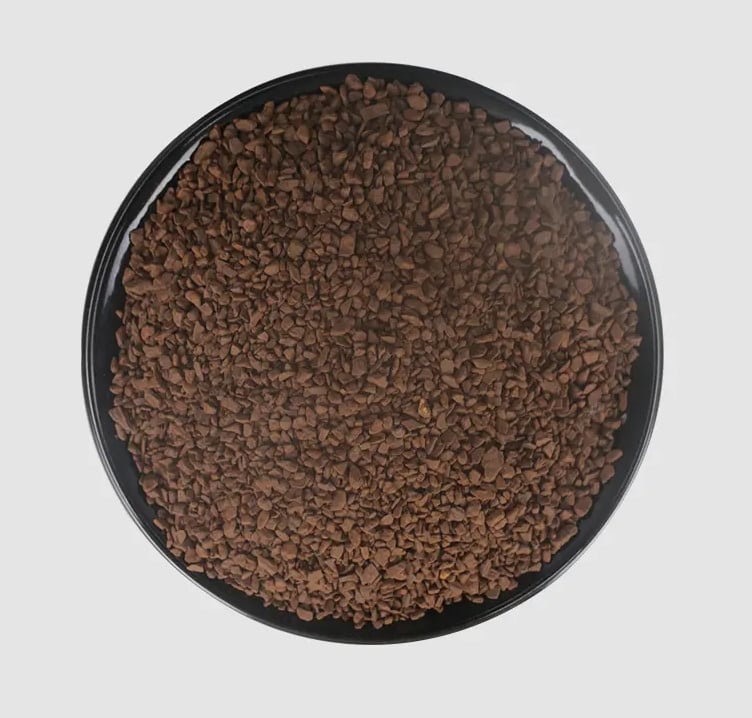
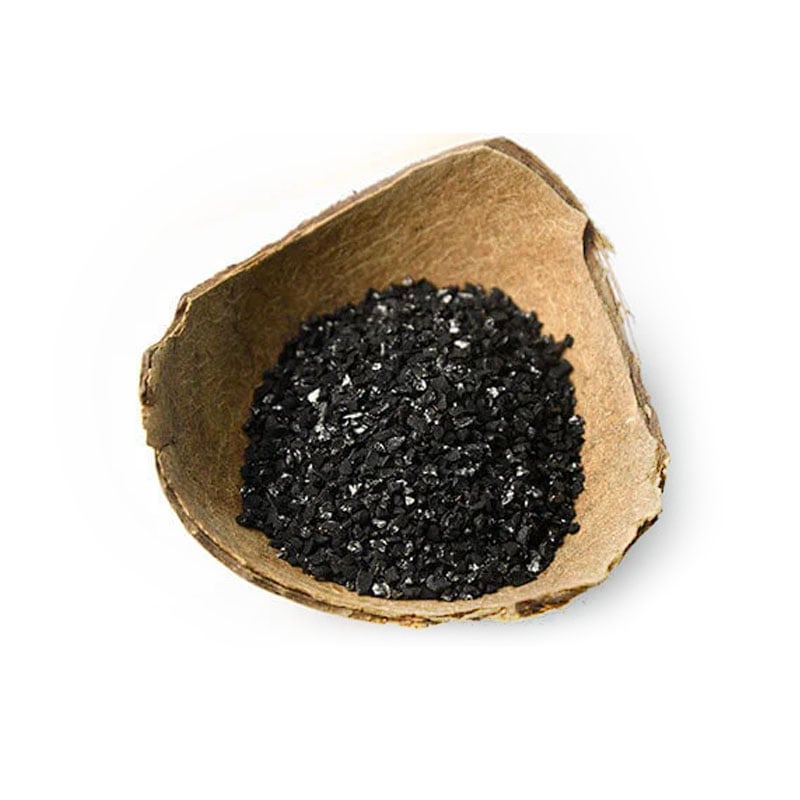
Coconut shell granular activated carbon |
| Application |
Smoke sensor / smoke alarm filter element |
| Iodine value |
≥1300 mg/g |
| Ash content |
<2% |
| Moisture |
<3% |
| pH |
8–9 |
| Mesh size |
30–60 mesh (20–40 mesh also tested) |
| Sample stage |
0.5 kg per mesh size |
| Order quantity |
10 tons (one 20ft FCL) |
| Port of discharge |
Incheon, Korea |
| Packaging |
25 kg bags, palletized & film-wrapped |
Why Smoke Sensors Are So Hard on Activated Carbon
Smoke sensor manufacturers face a problem most carbon buyers never think about: the carbon is a functional component, not a consumable. It sits inside the sensor for years, and its job is to adsorb interfering gases — cooking fumes, humidity-driven volatiles, exhaust — while letting genuine smoke trigger the alarm correctly.
That job demands far tighter specs than ordinary purification:
-
Iodine value ≥1300 mg/g. High microporosity means strong, stable adsorption of low-concentration nuisance gases over the sensor's entire service life. Lower-iodine carbon saturates early and false alarms follow.
-
Ash <2%. Mineral residue is the enemy of electronic components. Ash can release conductive dust and trace ions inside a sealed sensor housing — a source of signal drift.
-
Moisture <3%. Humidity is the most common trigger of false alarms. Carbon with high moisture content becomes a humidity reservoir inside the sensor itself.
-
pH 8–9. Slightly alkaline, neutral-clean carbon. Acidic carbon can corrode adjacent metal parts and off-gas odors into the sensor chamber.
-
Mesh size matters more than people expect. The carbon bed must balance adsorption speed against airflow resistance. This is exactly where this customer's previous supplier samples failed.
Rule of thumb: if your sensor calibration keeps drifting or your false-alarm rate spikes in humid weather, don't blame the optical chamber first — check the carbon's ash, moisture and particle size consistency.
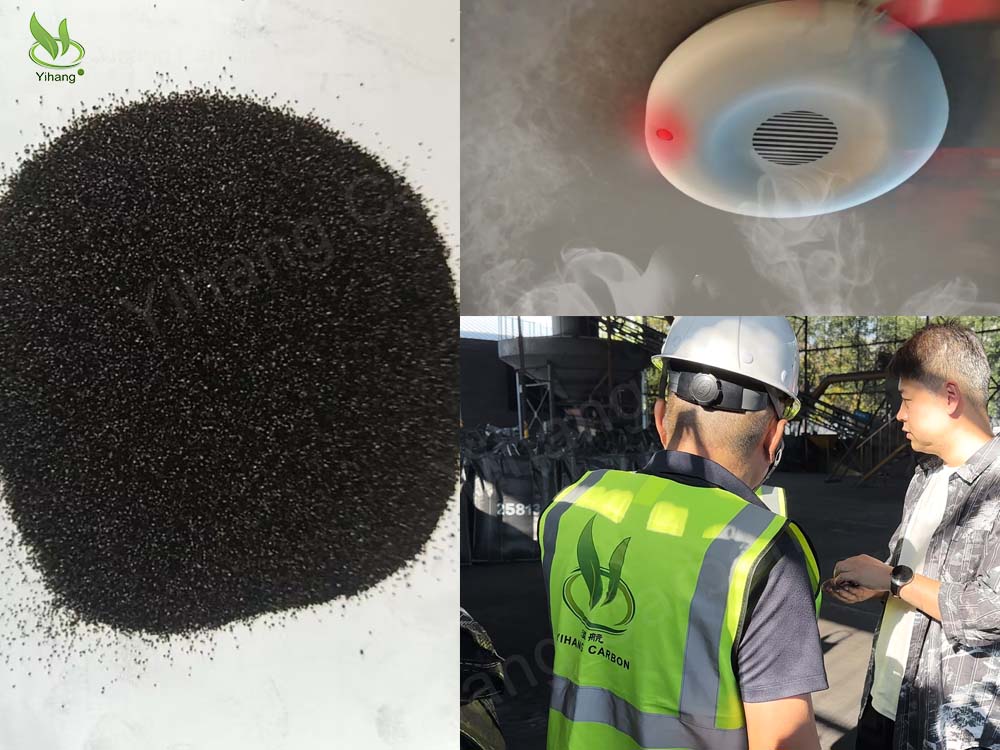
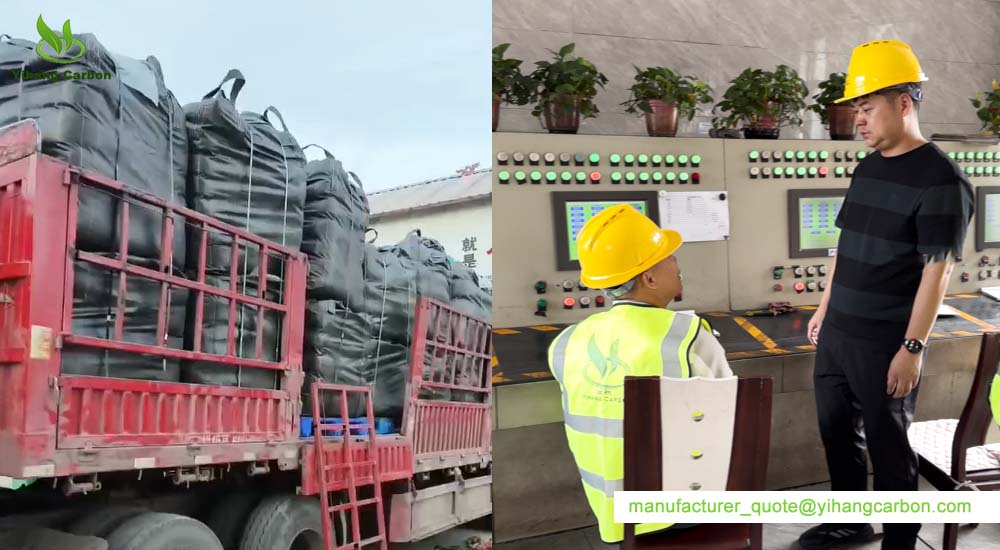
25 kg bags of 30-60 mesh coconut shell activated carbon (iodine 1370+ mg/g, ash <2%, moisture <3%), palletized and ready for shipment to Incheon, Korea — every batch tested 3 times, every pallet traceable.
Need Activated Carbon?
Get Factory?Direct Pricing — No Middlemen
30 years manufacturing. MOQ 1 ton. Free samples. Reply within 1 hours.
The Testing Story: Two Mesh Sizes, One Clear Winner
The customer came to Yihang Carbon after a long and frustrating search. They had tested coconut shell activated carbon from numerous suppliers for their smoke sensor production — and not one sample met their internal standard for adsorption consistency and batch stability.
They asked us for test samples of both 20–40 mesh and 30–60 mesh, 0.5 kg each — the same spec we would later ship as bulk goods.
Their in-house test result was clear: the 30–60 mesh sample outperformed the 20–40 mesh in their smoke sensor application. The finer, more uniform particle distribution gave faster adsorption response and a more consistent filter bed — exactly what their sensor design needed.
Because Yihang Carbon sells factory-direct — no traders, no re-bagging — the price for the approved spec was highly competitive. The customer moved quickly: 10 tons, one 20ft container, to Incheon Port.
Packaging & Shipping to Korea
-
25 kg bags, palletized and stretch film-wrapped — clean, moisture-protected, and forklift-friendly for the customer's warehouse.
-
One 20ft FCL carrying the full 10-ton order to Incheon Port.
-
Full COA with every batch: iodine value, ash, moisture, pH, particle size distribution — matching the samples the customer approved.
-
Complete export documentation: commercial invoice, packing list, and certificate of origin, prepared for smooth Korea customs clearance.
Product Specification
| Specification |
Industry Standard |
Yihang Carbon Custom Spec |
| Raw material |
— |
Coconut shell |
| Iodine value |
≥1000 mg/g |
≥1300 mg/g |
| Ash content |
≤5% |
<2% |
| Moisture |
≤10% |
<3% |
| pH |
6–11 |
8–9 |
| Mesh size |
4×8, 6×12, 8×30 |
20–40 / 30–60 (custom) |
In Production — and a Second Order Coming
The 10-ton shipment has been put into production. The customer's feedback confirms what their lab tests predicted: the bulk goods perform exactly like the approved samples — same adsorption behavior, same batch consistency.
A second order of roughly the same volume is expected within about five months.
Why Smoke Sensor Manufacturers Choose Yihang Carbon
-
True factory-direct supply. Yihang Carbon manufactures the carbon ourselves, so the sample you test is the carbon we ship — no re-bagging, no spec drift between sample and bulk.
-
Custom specs on demand. Iodine value, moisture, pH, particle size distribution — we adjust production parameters to your application, whether it's smoke sensors, gas masks, or gold recovery.
-
10 production lines. Full range of specifications in stock and in rotation, so we can scale with your order book.
-
3-day stock preparation. Once your sample test passes, we can have bulk goods ready for shipment within 3 days — built for buyers with urgent lead times.
-
Batch consistency guaranteed. COA on every lot, retained samples on file, so order #5 matches order #1.
Need coconut shell activated carbon for smoke sensors, gas masks, or other precision applications? Contact Yihang Carbon today for free test samples — tell us your target spec, and we'll prepare 0.5 kg within days.
Need Coconut Shell Carbon for Smoke Sensors or Precision Electronics ?
Tell us your sensor type, target spec, and monthly usage. We will recommend the right mesh size and iodine value, send free 0.5 -1kg samples for testing, and guarantee every batch matches your approved sample — tested 3 times before shipment.
FAQ
Q1: Why did 30-60 mesh outperform 20-40 mesh in smoke sensors?
Particle size controls the balance between adsorption speed and bed airflow resistance. The finer 30-60 mesh provides a larger effective surface area per unit volume and a more uniform filter bed, giving faster, more consistent adsorption of nuisance gases — which is what this customer's sensor design required. Coarser 20-40 mesh suits applications where low pressure drop matters more.
Q2: Is 1300 iodine value necessary for smoke alarm carbon?
For sensors expected to work reliably for years, higher iodine value (≥1300 mg/g) provides the micropore capacity and long-term stability that lower-grade carbon cannot. Whether you need 1300 depends on your sensor's design life and target gas load — send Yihang Carbon your spec sheet and we'll match it.
Q3: Can Yihang Carbon customize specs for our application?
Yes. We routinely adjust iodine value, ash, moisture, pH, and particle size distribution per customer requirement — that's standard practice on our 10 production lines.
Q4: How fast can you deliver after our sample test passes?
Yihang Carbon can complete stock preparation within 3 days of sample approval, and bulk goods are guaranteed to match the approved sample specification.
 EN