28 tons coconut shell granular activated carbon (iodine 1000 mg/g, ASTM D4607, 40-80 mesh, hardness ≥98%) shipped to Chittagong, Bangladesh for water purifier filter cartridges. Free samples with batch COA.
A water purifier filter manufacturer in Bangladesh needed coconut shell granular activated carbon (GAC) that could pass a strict incoming inspection: iodine number 1,000 mg/g (ASTM D4607), moisture ≤8%, ash ≤3%, hardness ≥98%, apparent density 0.50–0.53 g/cm³, and a ≥95% particle-size pass rate that would actually be tested on arrival. After comparing our samples against a cheaper 20-ton lot that had already failed in service, the customer placed a 28 metric ton order — one 40 ft container of 40-80 mesh coconut shell GAC, and confirmed after sampling the bulk cargo that the delivered material matched the approved samples exactly.
This Shipment at a Glance
-
Product: Coconut shell granular activated carbon, 40-80 mesh
-
Application: Granular media for water purifier filter cartridges
-
Key spec: Iodine number 1,000 mg/g (ASTM D4607), hardness ≥98%
-
Order: 28 MT — 1 × 40 ft container, custom packaging
-
Destination: Chittagong (Chattogram), Bangladesh
-
Buyer type: Repeat customer, 4th consecutive order after a failed low-price purchase elsewhere
The application — GAC media for water purifier cartridges
Bangladesh has one of the fastest-growing residential water purifier markets in South Asia. Surface and groundwater in many districts carries dissolved organics, chlorine by-products, odors, and color; point-of-use and point-of-entry purifiers therefore rely on granular activated carbon beds as their core treatment stage.
-
Adsorption of dissolved organics — measured by iodine number, which reflects the micropore volume available for small-molecule contaminants.
-
Dechlorination and taste/odor control — chlorine reacts at the carbon surface, so carbon life depends on pore accessibility, not just total surface area.
-
Mechanical integrity — the bed must not crumble, dust, or channel during handling, filling, transport, and months of water flow.
This customer builds filter cartridges for the local purifier assembly trade. Their buyers — purifier OEMs and distributors in Dhaka and Chattogram — audit incoming carbon, which is why the particle-size pass rate and hardness figures in the spec sheet are written as "will be tested," not "nominal."
Why coconut shell carbon, and why this specification
Coconut shell vs. coal vs. wood: Coconut shell raw material is hard, low in ash, and produces carbon with a naturally microporous structure and high hardness (typically ≥95-98%). For drinking-water cartridges that must deliver stable dechlorination and low dust, coconut shell GAC is the standard choice over softer coal-based or wood-based granules.
The specification the customer set — and the reason behind each line:
| Parameter |
Customer requirement |
Why it matters in a cartridge
|
| Iodine number |
1,000 mg/g (ASTM D4607) |
Direct indicator of micropore capacity; correlates with adsorption capacity and bed life |
| Moisture |
≤8% |
Excess water is dead weight and promotes microbial growth in storage |
| Ash |
≤3% |
High ash reduces effective carbon content and adds soluble mineral leaching |
| Apparent density |
0.50–0.53 g/cm³ |
Tight window the customer's filling lines and bed-volume calculations are built around |
| pH |
9–11 |
Confirms proper activation and rinse; extreme pH would leach into product water |
| Hardness |
≥98% |
Prevents granule breakdown, fines formation, and pressure-drop rise in the cartridge |
| Particle-size pass rate |
≥95% (strictly tested) |
Off-spec granules cause channeling, dust, and inconsistent bed packing |
Apparent density 0.50–0.53 g/cm³ is a window, not a target. Carbon with density at the low end carries more pore volume per kilogram; at the high end, more mass per litre of bed. Cartridge makers specify a narrow band so that every batch fills their cartridges to the same weight and performance without recalibrating lines. Holding a 0.03 g/cm³ window across a 28-ton lot is a production-control exercise, not a lab accident.
Why the cheaper 20-ton lot failed
In April this year, the customer returned to us for a repeat purchase. Our quotation came in higher than the previous cycle, and we explained why: coconut shell raw material prices had risen substantially, and a genuine 1,000 mg/g iodine coconut shell carbon cannot be produced at the old price point. The customer still placed a 20-ton order with a lower-priced supplier.
Two months later, the customer came back — the low-price material had developed quality problems in production. This is a pattern we see repeatedly in coconut shell GAC trading:
-
Iodine number shortfall: material advertised at "1,000 mg/g" that tests 850–900 mg/g. The gap is usually filled by blending with lower-iodine carbon or under-activated product.
-
Hardness below spec: granules abrade during cartridge filling and in service, generating fines that clog the cartridge and raise pressure drop.
-
Wide particle-size distribution: pass rate below 95% means dust and oversize fragments in the same bag, causing channeling and inconsistent contact time.
-
Ash and pH drift: signs of inconsistent raw material and incomplete washing.
The buyer's test report — not our opinion — was what ended that experiment. The lesson generalizes: in activated carbon, the spread between a fair price and an impossibly low price is almost always adsorption capacity or hardness that was never produced into the material.
Need Activated Carbon?
Get Factory?Direct Pricing — No Middlemen
30 years manufacturing. MOQ 1 ton. Free samples. Reply within 1 hours.
From 4 sample bags to a 28-ton order
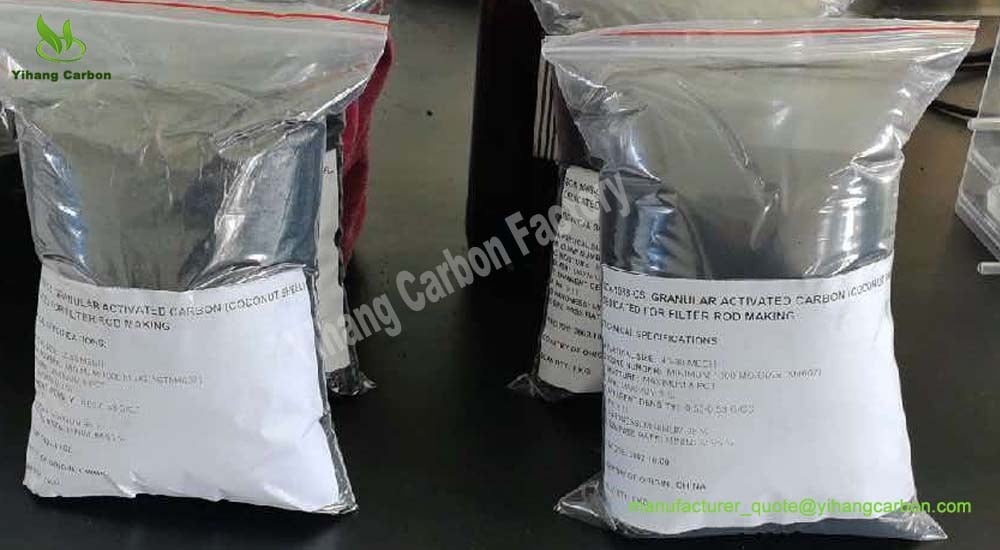
The customer's technical team requested two mesh-size samples before committing:
-
30-40 mesh, 1 kg/bag × 2 bags
-
40-80 mesh, 1 kg/bag × 2 bags
We prepared 4 bags, each 1 kg, from current production with the batch COA attached. The customer ran its own lab tests and small cartridge trials. The 40-80 mesh sample passed clearly — mesh size, pass rate, hardness, and iodine all met the specification — and the customer moved directly to bulk.
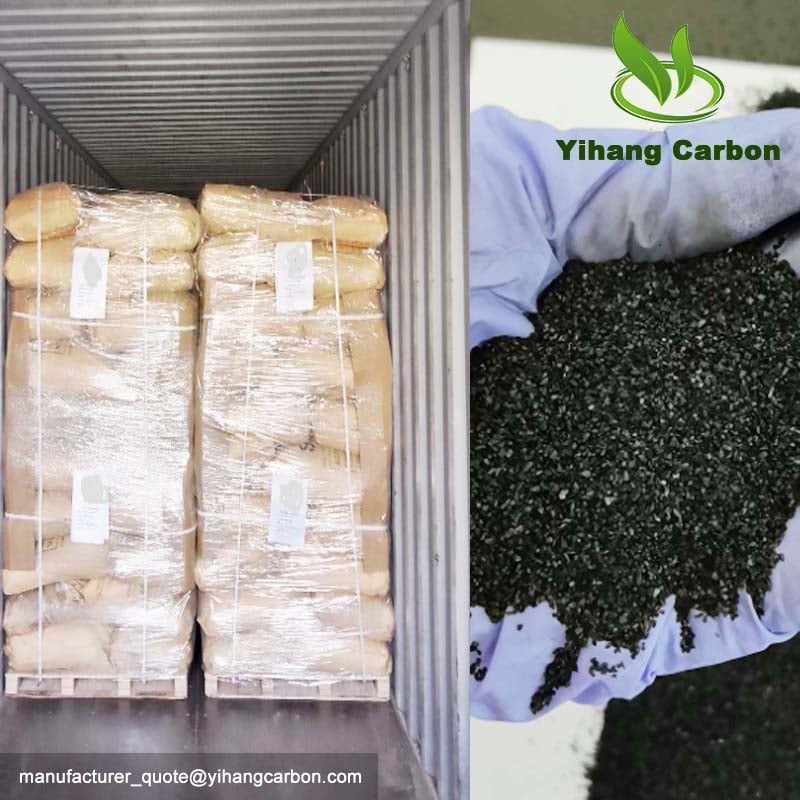
Because this was a repeat customer, the commercial side was fast: custom packaging and shipping details were confirmed in a short exchange, and the 28-ton lot shipped within the agreed delivery window as one full 40 ft container to Chittagong.
Bulk cargo matched the samples — verified by the customer's own sampling
After arrival, the customer did what careful buyers do: pulled samples from the bulk cargo and tested them against the retained reference samples from the trial. The results matched — bulk material and approved samples were the same quality.
This is not a claim we make; it is the operating reason samples from us ship from the same specification and production control system as bulk orders, each lot with its own COA. A sample that cannot survive that comparison is a liability, not a sales tool.
| Order detail |
Specification
|
| Destination |
Chittagong (Chattogram), Bangladesh |
| Product |
Coconut shell granular activated carbon, 40-80 mesh |
| Quantity |
28 MT |
| Container |
1 × 40 ft container |
| Iodine number |
1,000 mg/g (ASTM D4607) |
| Moisture / Ash |
≤8% / ≤3% |
| Apparent density |
0.50–0.53 g/cm³ |
| pH / Hardness |
9–11 / ≥98% |
| Size pass rate |
≥95% (strictly tested by customer) |
| Buyer status |
4th consecutive order; returned after a failed low-price purchase |
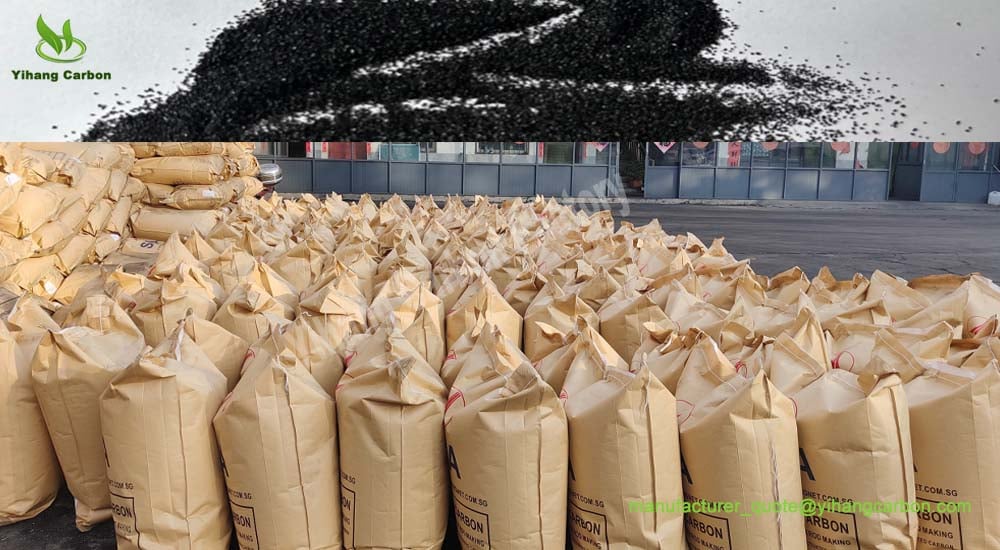
Coconut Shell Activated Carbon and Custom Packaging
What this order says about buying coconut shell GAC
Three takeaways for buyers sourcing carbon for water purifier cartridges:
-
Test the sample, then test the bulk cargo. This customer now does both. Any supplier unwilling to have bulk cargo compared against approved samples is telling you something.
-
A narrow apparent-density window is a quality signal. Producers who can hold 0.50–0.53 g/cm³ across a full container control activation and raw material selection; traders re-bagging variable lots cannot.
-
The low-price risk is real and quantifiable. A 20-ton lot that fails in production costs more than the price difference it saved — in rejected cartridges, re-processing, and lost OEM trust.
Buyer FAQ
Is 1,000 mg/g iodine number necessary for water purifier cartridges?
For municipal tap water with chlorine and moderate organics, 1,000 mg/g gives a comfortable service-life margin. If your source water is heavily contaminated, capacity matters even more. If your cartridge is a simple taste-and-odor polish, a lower grade may suffice — but specify honestly and test honestly.
30-40 mesh or 40-80 mesh — which should I choose?
It depends on your cartridge geometry and flow rate. Finer 40-80 mesh gives more surface area per volume and faster kinetics but higher pressure drop; coarser 30-40 mesh flows more freely. This customer tested both and chose 40-80 mesh. We recommend testing both in your actual cartridge before bulk purchase — samples with batch COA are free.
How do I verify particle-size pass rate on arrival?
Sieve a representative sample per your mesh standard, weigh the retained fraction, and compare against the ≥95% pass rate on the COA. Ask your supplier for the test method in advance so both sides test the same way.
Why did coconut shell activated carbon prices rise?
Coconut shell is an agricultural by-product with a supply set by harvests in producing regions. When shell availability tightens or demand from gold recovery and water treatment rises simultaneously, raw material costs move quickly — and they flow through to genuine high-iodine carbon. An offer that ignores the raw-material market should be treated with suspicion.
Can I start with a small trial order?
Yes. This customer's 28-ton order began with 4 × 1 kg sample bags. We supply samples from current production with batch COA; trial orders of 1 ton or more are available before container-scale commitments.
About our coconut shell activated carbon production
We manufacture coconut shell activated carbon in granular, powdered, and pelletized forms, with iodine numbers from 800 to 1,100+ mg/g on controlled raw material selection and activation. Each lot is tested for iodine number (ASTM D4607), moisture, ash, apparent density, pH, hardness, and particle-size distribution, and ships with its batch COA. Packing options include 25 kg bags, 500 kg jumbo bags, and custom packaging for OEM cartridge lines. Related reading: our coconut shell activated carbon product page and water treatment activated carbon overview.
Sourcing Coconut Shell GAC for Filter Cartridges?
Send your cartridge drawing or bed volume, target flow rate, and the specification your QC team will test against. We will confirm the mesh size, hold the density window, quote factory-direct with batch COA, and ship samples from current production before you commit.
Request a Coconut Shell GAC Quote ?
Response within 24 hours · Free samples with batch COA · Custom mesh sizes and packaging .
 EN