Oct 23,2025
A critical error in laboratory experiments with activated carbon arises from misinterpreting adsorption mechanisms, leading to skewed results and invalid conclusions. While activated carbon's adsorption capability stems from its complex pore structure and surface chemistry, researchers often conflate physical and chemical adsorption processes, compromising experimental validity.
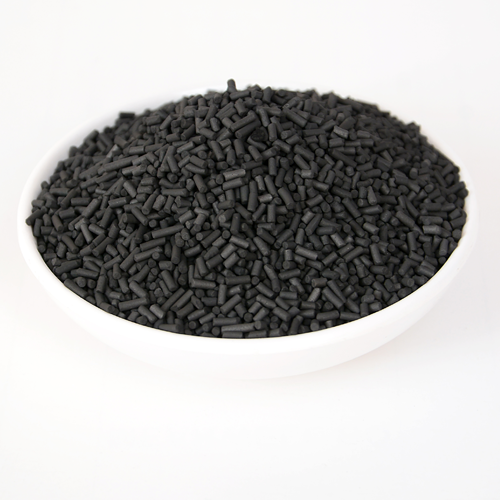
When it comes to physical adsorption, what we're really talking about are those weak van der Waals forces acting between contaminants and carbon surfaces. This kind of interaction is actually reversible and works pretty well for grabbing hold of nonpolar substances such as benzene. On the flip side, chemical adsorption happens when there's actual covalent bonding taking place. We often see this with sulfur treated carbons interacting with mercury vapor. According to research published last year, around one third of scientists have been getting confused about chemisorption data, mistaking it for simple physical processes. That misunderstanding leads to problems down the road with how these materials get regenerated. Take hydrogen sulfide for instance. Trying to heat treat carbon that has chemically bound contaminants ends up wrecking its delicate internal structure permanently.
Activated carbon's adsorption capacity directly correlates with its pore size distribution:
Surface chemistry also plays a pivotal role. Oxygen-rich functional groups enhance polar compound adsorption—phenol removal efficiency increases by 18% in oxidized carbons versus non-modified variants (Carbon Surface Chemistry Study, 2021). Ignoring these factors during material selection can reduce adsorption capacity by 40–60% in VOC removal experiments.
The way VOCs stick to surfaces really comes down to three main factors: how heavy the molecules are, their electrical charge, and how concentrated they're in the air. Activated carbon works pretty well for grabbing those heavier stuff like xylene which weighs around 106 grams per mole. But when it comes to lighter ones such as formaldehyde at about 30 grams per mole, regular carbon just doesn't cut it. We need special versions of carbon that have been tweaked to grab these smaller molecules better. According to an EPA study from last year, standard carbon filters took out nearly 9 out of 10 toluene particles but managed only about two thirds of acetone even when everything else was kept exactly the same. This kind of gap shows why we can't rely on one size fits all approaches when testing different chemicals.
Many lab groups still think that heavier looking carbon means better adsorption power, but this isn't always true. Research published in the Carbon Technology Journal back in 2021 showed something interesting. Low density coconut shell carbons at around 0.45 grams per cubic centimeter actually worked better for absorbing iodine than those dense coal based ones sitting at 0.55 g/cm³. The difference? Those coconut shells had this amazing pore structure giving them about 1,500 square meters of surface area per gram compared to just 900 from the denser options. When picking the right activated carbon, smart folks know they need to look at both how heavy it is and what's going on inside those pores instead of just weighing things down.
By addressing these mechanistic misunderstandings, researchers can improve experimental reproducibility and optimize activated carbon performance in applications ranging from environmental remediation to pharmaceutical purification.
The phenol number test continues to spark debate when it comes to measuring how well activated carbon works, since research has found around plus or minus 25% differences even when testing exactly the same samples under lab conditions. Although some old school methods still cite this measure, it doesn't really handle changes in polarity from newer pollutants such as perfluorinated compounds (PFCs), making it less reliable for today's lab work. Looking at data from an industry report released in 2025 shows plants that depend solely on phenol numbers end up replacing filters about 38% more often than labs employing multiple assessment parameters.
The iodine number test has become pretty standard for estimating surface areas, but it just doesn't work when trying to predict how materials will handle bigger molecules over 1.2 nanometers in size. This leads to all sorts of false positive results in air purification research. Take the ASTM D5742 butane activity test too. Labs have found that it correlates only weakly with actual VOC adsorption performance in real life situations. A recent study from 2023 showed the correlation coefficient was around 0.41, which isn't great at all. What these commonly used tests miss are important things like variations in pore sizes throughout the material and what happens when different substances compete for space on the surface during adsorption processes.
When activated carbon samples aren't properly subsampled, the resulting adsorption capacity reports can vary by as much as 15 to maybe even 20 percent. Looking at the latest quality assurance checks from 2024, around two thirds of laboratories made mistakes that went beyond the 5% error margin. The main culprits? Microbalances that hadn't been calibrated recently or tests stopped too early during breakthrough curve monitoring. Controlling humidity levels tightly within plus or minus 2% relative humidity makes a big difference. Labs that follow EPA Test Method 5021A guidelines tend to see their error rates drop significantly, sometimes cutting those problems down by nearly four fifths according to controlled experiments.
Overlooking saturation thresholds in activated carbon laboratory experiments leads to pollutant desorption — a phenomenon where 58% of captured VOCs can be rereleased when adsorption sites reach capacity (Environmental Science & Technology, 2022). Real-time pressure-drop monitoring reveals saturation patterns, yet 33% of researchers still rely solely on manufacturer-recommended replacement timelines rather than performance data.
Delayed filter replacements degrade adsorption efficiency by 19–42% for common lab contaminants like toluene and formaldehyde (Journal of Hazardous Materials, 2023). A 12-month study of 47 lab ventilation systems showed optimized replacement cycles improved activated carbon's benzene removal rate from 71% to 93% while reducing operating costs by $28/ton of processed air.
A sealed laboratory environment using activated carbon for xylene removal experienced breakthrough contamination after 83 operating hours — 37% sooner than predicted. Post-analysis revealed three critical errors:
This incident highlights the necessity of coupling breakthrough curve modeling with real-time VOC sensors in laboratory experiments.
Improper protocols create systemic contamination risks that skew results and compromise data integrity.
Residual contaminants from inadequately cleaned glassware or filtration systems reduce activated carbon's adsorption efficiency. Studies show even trace organic residues (0.2–1.3 ppm) alter surface chemistry interactions by 18–34% during VOC adsorption tests.
Polychlorinated Biphenyls (PCBs) and plasticizer leaching from storage containers bind irreversibly to activated carbon pores. Airborne particulates in unregulated lab environments introduce competing adsorbates, distorting kinetic models for target pollutants.
Contaminated control samples create false baselines, leading to:
Recycling spent activated carbon without industrial-grade thermal or chemical regeneration leaves 30–40% residual contaminants (Environmental Science & Technology 2023). Laboratory experiments often mistakenly assume simple washing restores adsorption capacity, despite evidence showing microwave-assisted reactivation achieves only 78% porosity recovery versus virgin material.
Controlled studies demonstrate UV exposure provides 5% adsorption capacity restoration for VOC removal—statistically insignificant compared to 85–92% recovery via steam regeneration (Journal of Hazardous Materials 2022). This misconception persists due to misinterpreted surface moisture evaporation effects during outdoor drying.
Cost-driven reactivation shortcuts increase exposure risks:
Inhalable particles (<10 μm) from crushed carbon account for 22% of lab respiratory incidents annually. Proper handling requires:
 EN
EN