Coal-based granular activated carbon is a cost-effective filtration media for municipal water treatment, industrial wastewater polishing, beverage process water, and RO pretreatment. This guide explains how coal-based GAC removes chlorine, taste and odor compounds, color, and selected organics through adsorption, and why EBCT, bed depth, particle size distribution, ash content, hardness, and leachables matter as much as iodine value. Compare common specifications such as 8×30 mesh, 12×40 mesh, and 2–4 mm media, then evaluate suppliers by raw material control, third-party COA, drinking-water compliance, batch consistency, technical support, and export reliability. A practical checklist helps buyers reduce total treatment cost, avoid underspecification, and select a dependable activated carbon supplier for long-term water treatment performance.
Coal-based granular activated carbon is one of the most widely used filtration media in municipal water treatment, industrial wastewater polishing, commercial pretreatment, and beverage process water systems. For many projects, it offers a practical balance of adsorption capacity, particle size control, mechanical strength, and cost per treated cubic meter.
This guide explains where coal-based GAC works best, how to specify it, and how to evaluate an activated carbon supplier before placing a bulk order.
Quick Guide
-
Best suited for: dechlorination, taste and odor control, color reduction, some VOCs, and polishing after biological or physicochemical treatment.
-
Common mesh sizes: 8×30, 12×40, and 2–4 mm for larger fixed-bed systems.
-
Typical iodine value: 800–1,050 mg/g, depending on grade and application.
-
Key design parameter: EBCT, not iodine value alone.
-
Drinking water projects: require drinking-water compliance documents and third-party COA.
1. Why Choose Coal-Based Granular Activated Carbon for Water Treatment?
The main reason engineers choose coal-based GAC is not a single laboratory number. It is the overall operating economy: purchase cost, adsorption performance, pressure drop, attrition resistance, and regeneration potential.
Lower cost for large-scale systems
Coal-based GAC is usually more cost-competitive than high-iodine coconut shell carbon in bulk water treatment applications. For municipal plants, industrial parks, power plants, and wastewater reuse systems, the difference becomes significant when carbon is purchased by the container load and replaced or regenerated on a fixed cycle.
However, the cheapest carbon is not always the lowest-cost carbon. A better comparison is:
cost per m³ treated = carbon price + freight + backwash water + energy loss + replacement/regeneration frequency
A slightly higher-priced GAC with stable particle size, lower ash, and better bed life can reduce total operating cost.
Balanced pore structure for common contaminants
Steam-activated coal-based GAC typically contains both micropores and mesopores. Micropores help remove smaller molecules such as free chlorine and some disinfection byproducts. Mesopores improve access for larger organic molecules, color bodies, and certain industrial organics.
For many conventional water treatment goals, coal-based GAC is not a compromise. It is the standard choice.
Better particle size control for fixed beds
In a granular activated carbon bed, performance depends heavily on consistent particle size. Coal-based GAC is available in a wide range of sizes, from fine 8×30 mesh for pretreatment to coarser 2–4 mm media for large filters with low headloss.
The right size depends on your system:
-
Finer particles increase contact but raise pressure drop.
-
Coarser particles reduce backwash stress and headloss but require sufficient bed depth and EBCT.
-
Stable d10/d50/d90 distribution matters more than a nominal mesh name.
Suitable for backwashing and regeneration
Municipal and industrial systems rarely treat GAC as a disposable cartridge. With proper pretreatment, backwashing, and monitoring, coal-based GAC can be thermally regenerated after breakthrough. Good hardness and low fines generation are therefore important purchasing criteria.
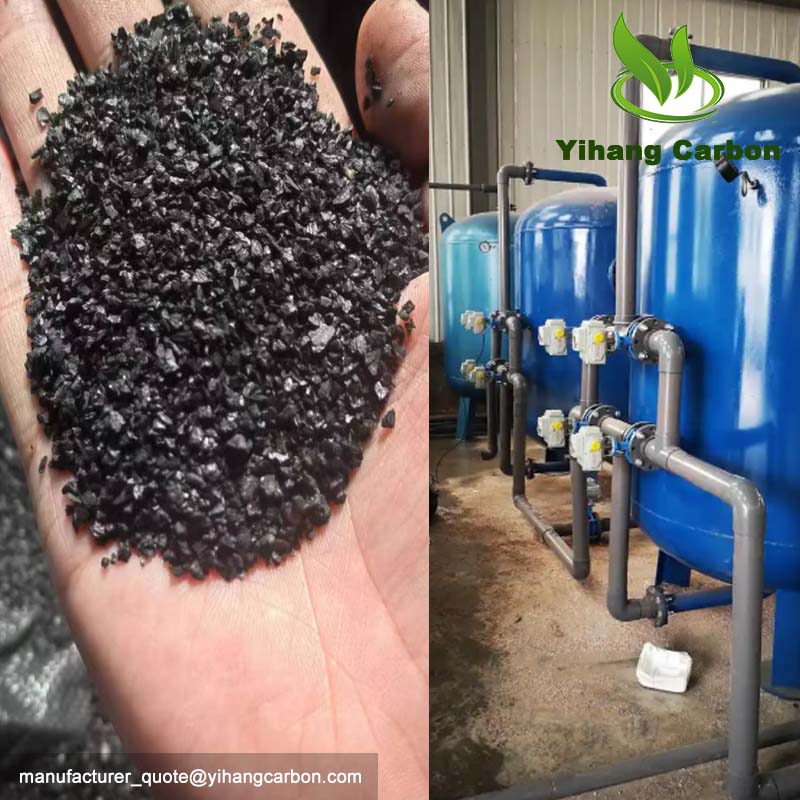
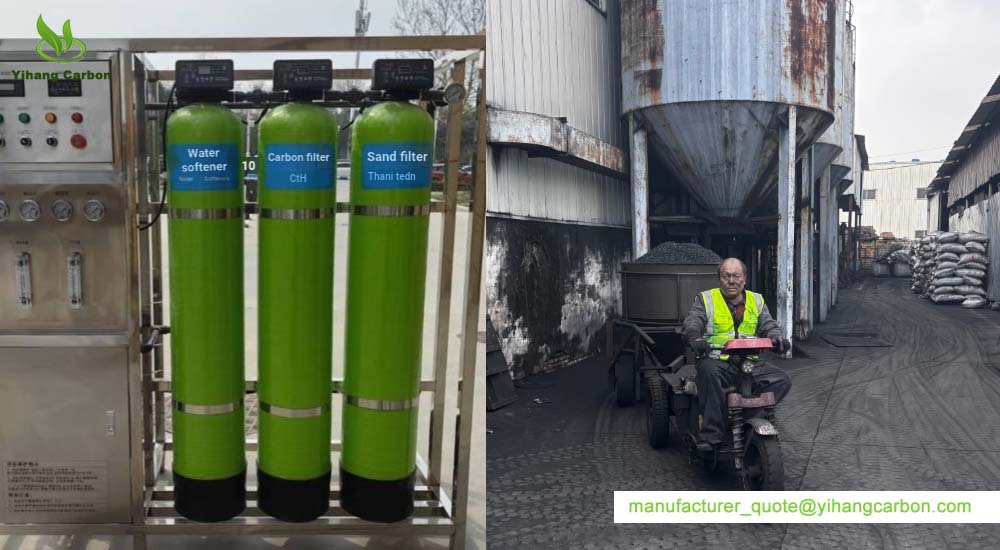
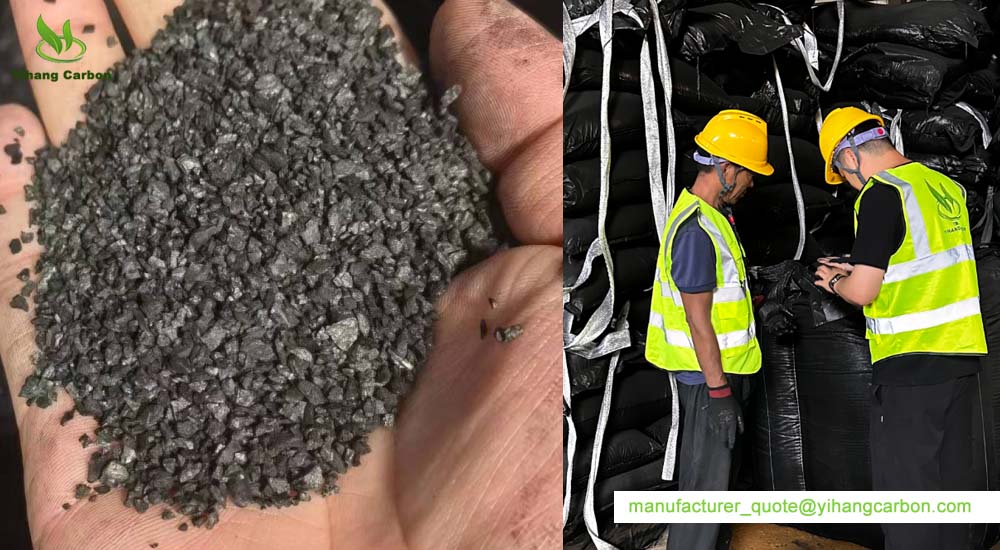
Pic: Coal-based granular activated carbon is used in water purification equipment and activated carbon production lines.
2. Common Water Treatment Applications
Residential and commercial water pretreatment
Coal-based granular activated carbon is widely used for building water supply, hotels, hospitals, schools, and commercial facilities where the main goals are chlorine removal, taste improvement, and protection of downstream RO membranes or ion exchange resin.
Recommended focus:
-
Low ash and low leachables
-
Consistent 8×30 or 12×40 mesh
-
Drinking-water compliant documentation where required
-
Adequate EBCT for chlorine control rather than excessive flow rate
For RO pretreatment, carbon should remove chlorine effectively without releasing excessive fines into the membrane feed.
Beverage and food process water pretreatment
In beverage plants, process water often needs dechlorination and odor control before filtration, RO, UV, or filling. A common starting specification is 8×30 mesh coal-based GAC, but the final choice should be confirmed by water analysis and, where possible, a small column test.
For food and beverage use, documentation matters as much as adsorption capacity: COA per batch, heavy metal or leaching tests where applicable, and traceability.
Municipal water treatment
Municipal systems use GAC in pressure filters, gravity filters, BAC processes, taste and odor control units, and advanced treatment trains. For large filters, coarser media such as 2–4 mm is often selected to reduce headloss and improve backwash behavior.
In municipal design, do not size the bed by mesh size alone. Confirm:
-
Design flow and peak flow
-
Empty bed contact time, often around 5–10 minutes for dechlorination and higher for more demanding targets
-
Minimum bed depth, commonly at least 0.9 m and often 1.2–2.0 m in larger systems
-
Backwash air/water conditions and expected media loss
-
Breakthrough monitoring and regeneration plan
Industrial wastewater and reuse
Coal-based GAC is commonly used for industrial effluent polishing, color removal, residual COD reduction, and protection of downstream processes. Typical industries include textiles, chemicals, paper, coking, oil and gas, electroplating parks, and pharmaceutical wastewater.
For industrial streams, GAC should usually be the polishing step, not the only treatment step. High oil, suspended solids, hardness, or salinity can shorten carbon life quickly. Pretreatment and pilot testing are strongly recommended.
What coal-based GAC should not be expected to do
Coal-based GAC is not a complete solution for:
-
Nitrate, fluoride, arsenic, hardness, or TDS
-
Bacteria and virus disinfection
-
Strongly hydrophilic or short-chain contaminants without verified adsorption data
-
High-solids wastewater without upstream clarification
These require ion exchange, membranes, chemical treatment, disinfection, or hybrid processes.
Need coal-based granular Activated Carbon?
Get Factory?Direct Pricing — No Middlemen
30 years manufacturing. MOQ 1 ton. Free samples. Reply within 1 hours.
3. Typical Specifications for Coal-Based GAC in Water Treatment
Use this table as a starting point. Final values should be confirmed against project water quality, pilot results, and supplier COA.
| Parameter |
Common Range |
Selection Notes
|
| Raw material |
Anthracite, bituminous coal, lignite |
Affects pore structure, ash, strength, and leachables |
| Iodine value |
800–1,050 mg/g |
Higher is useful, but not sufficient alone |
| Methylene blue value |
Grade dependent |
More relevant for color and larger organics |
| Particle size |
8×30, 12×40, 1–2 mm, 2–4 mm |
Match EBCT, pressure drop, and backwash design |
| Apparent density |
Approx. 0.42–0.58 g/cm³ |
Affects vessel sizing and freight calculation |
| Moisture |
≤5%, stricter on request |
High moisture increases delivered cost and storage risk |
| Ash |
≤8–12%; lower for sensitive uses |
High ash reduces usable adsorption capacity |
| Hardness / attrition resistance |
≥90–95% |
Critical for backwash and pressure filtration |
| pH |
Near neutral, grade dependent |
Check for acid-washed grades if needed |
| Fines / floating rate |
Low as possible |
Affects initial rinsing, turbidity, and bed stability |
| Documentation |
COA, third-party test report, drinking-water compliance where applicable |
Essential for municipal, export, and drinking water projects |
A practical rule: iodine value opens the conversation; particle size distribution, ash, hardness, leachables, and batch consistency win the project.
4. How to Choose an Activated Carbon Supplier
Selecting a granular activated carbon supplier is an engineering decision, not only a purchasing decision.
Ask about raw material and process control
A reliable supplier should explain coal source, activation method, acid washing, water washing, screening, and whether reclaimed carbon is blended. For consistent water treatment performance, process control matters more than marketing claims.
Require third-party COA and traceability
For each shipment, request:
-
Iodine value
-
Methylene blue value
-
Particle size distribution
-
Moisture, ash, hardness, apparent density, pH
-
Leaching or heavy metal tests where required
-
Batch number and retained samples
For drinking water or food-related projects, confirm the required certification route before order confirmation.
Evaluate particle size consistency
Ask for d10, d50, and d90 data, not only “8×30 mesh.” Also ask about fines content, oversize fraction, floating rate, and recommended initial backwash procedure after installation.
Look for application support
A strong activated carbon supplier should ask for flow rate, water analysis, target contaminant, influent/effluent limits, vessel diameter, bed depth, backwash conditions, and regeneration expectations. If a supplier only asks for tonnage, expect higher project risk.
Confirm supply continuity
For municipal and industrial buyers, consistent delivery is often more important than the lowest quote. Review production capacity, raw material security, inventory, lead time, export experience, and quality complaint handling.
Put quality terms in the contract
Include batch COA, third-party inspection rights, retained samples, rejection criteria, and documentation deadlines. These terms protect both sides and reduce disputes after arrival.
5. China as a Sourcing Base for Coal-Based GAC
China remains one of the most important supply bases for coal-based granular activated carbon used in global water treatment projects.
The strengths are practical:
-
Mature manufacturing clusters for coal-based carbon production
-
Wide availability of 8×30, 12×40, and 2–4 mm specifications
-
Competitive cost for container-load and long-term framework orders
-
Improved export documentation, including third-party testing support
-
Ability to support custom grades, packaging, and project-based delivery schedules
For international buyers, the key is not to avoid risk by avoiding China; it is to control risk through clear specifications, COA verification, third-party inspection, and pilot testing before full-scale purchase.
Need coal-based granular activated carbon for water treatment?
Tell us your flow rate, water analysis, target contaminant, and application — we'll recommend the right GAC grade and send a quotation within 24 hours.
Request a Quote
6. Frequently Asked Questions
Is coal-based granular activated carbon suitable for drinking water?
Yes, when correctly selected and documented. Drinking water contact requires compliance with the applicable sanitary or certification standard in the destination market, plus stable low-leaching performance and third-party COA.
Which is better for water treatment: 8×30 mesh or 2–4 mm?
It depends on the system. 8×30 mesh is common for pretreatment and smaller fixed beds. Coarser 2–4 mm media is often used in large municipal or industrial filters where lower headloss and stable backwash are priorities. EBCT and bed depth should decide the final size.
Is higher iodine value always better?
No. Iodine value is useful, but water treatment performance also depends on pore size distribution, contaminant molecular weight, EBCT, flow rate, pH, temperature, and competition from other organics. Methylene blue value and pilot breakthrough data may be more useful for color and industrial wastewater.
Can coal-based GAC remove heavy metals?
Not reliably by itself. Some removal may occur, but stable compliance usually requires acid-washed, impregnated, or specially selected carbon, often combined with precipitation, ion exchange, or membrane treatment. Always verify by testing.
How long does coal-based GAC last?
Service life can range from several months in difficult industrial streams to multiple years in well-pretreated municipal systems. Replace or regenerate based on breakthrough, pressure drop, and effluent quality, not calendar time alone.
Coal-based vs coconut shell GAC: which should I choose?
Choose coal-based GAC when cost, large fixed-bed operation, coarse particle availability, and regeneration matter most. Consider coconut shell GAC when very low ash, strict leaching limits, or specific micropore-sensitive applications justify the higher price. Many plants use both in different positions.
Final Selection Checklist
Before ordering, confirm:
-
Target contaminant and required effluent limit
-
Design and peak flow rate
-
Vessel size, bed depth, and available EBCT
-
Required mesh size and particle size distribution
-
Iodine value, methylene blue value, ash, moisture, hardness, density, pH
-
Drinking-water or food-related compliance documents if applicable
-
Batch COA, third-party inspection, and retained sample terms
-
Pilot column or historical performance data for similar water
If you share your flow rate, inlet water analysis, target effluent standard, and filter dimensions, we can recommend a suitable coal-based granular activated carbon grade and estimate bed volume, EBCT, and annual carbon consumption.
 EN