
Sep 07,2026
Dans l'extraction d'or par CIP/CIL, les performances du charbon actif de coque de noix de coco influent directement sur l'efficacité de récupération de l'or et sur les coûts d'exploitation globaux. Le Norit GCN612G est un charbon granulaire de coque de noix de coco de qualité supérieure, largement utilisé dans le monde entier pour les circuits d'extraction d'or par CIP/CIL/CIC. YHGOLD GRADE 1903 le charbon actif YH-Carbon 6×12, issu de la récupération de l'or à partir de coquilles de noix de coco et validé par SGS, est conçu comme une alternative performante et économique au GCN612G. Ce guide compare les deux produits paramètre par paramètre. Les différences de méthodologie de test sont clairement indiquées afin de vous permettre de prendre des décisions d'achat objectives.
Toutes les données sont issues des fiches techniques officielles des fabricants ; pour l’or YHGOLD GRADE 1903, les données proviennent du rapport d’essai SGS. Des notes sont ajoutées lorsque les normes d’essai sont incohérentes.
| Paramètre | YHGOLD GRADE 1903 | Norit GCN612G | Remarques |
|---|---|---|---|
| Matière première | Coque de coco | Coque de coco | Même catégorie de matières premières, activées à la vapeur |
| Application | Récupération d'or CIL / CIP / CIC | Récupération d'or CIL / CIP / CIC | Portée du processus identique |
| Nombre d'iode | 1145 mg/g (vérifié par SGS) | Indicateur non publié principal | Une teneur élevée en iode indique une structure microporeuse bien formée pour l'adsorption de Au(CN)₂⁻ |
| Teneur en cendres | 2,41 % (vérifié par SGS) | ≤3.5% | Une faible teneur en cendres est favorable ; YHGOLD 1903 se situe nettement en dessous de la limite supérieure de GCN612G. |
| Humidité | 4,7 % (vérifié par SGS) | ≤5% | Les deux se situent dans les tolérances standard de l'industrie. |
| Force / Dureté | 98,3 % (méthode GB/T) | ≥99 % (Bac à billes ASTM D3802) | ⚠️ Principes de test différents ; les valeurs ne sont pas directement comparables. |
| Valeur K (capacité de charge en or) | 31 kg/t | 29 kg/t | La gamme YHGOLD couvre intégralement la valeur nominale du GCN612G |
| Valeur R (taux d'adsorption) | 60‑62% | 60% | La bande de performance supérieure du YHGOLD correspond à la référence GCN612G |
| Usure | Données en attente | <1,0% (test de la bouteille qui roule) | Test d'attrition YHGOLD en cours ; les résultats seront publiés une fois terminés. |
| Teneur en plaquettes | Données en attente | <3.5% | Tests plaquettaires YHGOLD en cours |
| Taille des mailles | 6×12 / 8×16 / 5×10 | 6×12 / 8×16 | Options de granulométrie identiques ; compatible avec les systèmes d’insertion mécanique. |
Note honnête sur la comparaison de dureté la résistance à la compression de 98,3 % du YHGOLD GRADE 1903 est mesurée selon la norme chinoise GB/T. La dureté du Norit GCN612G (≥ 99 %) est déterminée par la méthode d'essai d'abrasion par roulement à billes ASTM D3802. La résistance à la compression et la résistance à l'abrasion par roulement sont des propriétés physiques distinctes. Une comparaison numérique directe est trompeuse. Si la durabilité mécanique du carbone est un critère important de votre appel d'offres, exigez que les deux fournisseurs fournissent des données d'essai conformes à une norme unique ou réalisent des essais d'attrition internes avec un éprouvette à billes.
L'indice d'iode est un indicateur de la surface microporeuse. Pour le charbon utilisé dans la récupération de l'or à partir de coquilles de noix de coco, un indice d'iode supérieur à 1000 mg/g confirme la présence de micropores suffisants pour capturer les molécules du complexe or-cyanure.
Les cendres occupent le volume des pores internes qui devraient accueillir les sites d'adsorption du cyanure d'or. Une teneur élevée en cendres dégrade progressivement les performances au fil des cycles répétés de réactivation thermique.
Pour tout charbon actif utilisé pour la récupération de l'or, toutes les spécifications secondaires servent en fin de compte deux objectifs pratiques principaux : quelle quantité d'or le carbone peut-il adsorber et à quelle vitesse ? .
Performances nominales publiées du Norit GCN612G : K = 29 kg/t, R = 60 %.
YHGOLD GRADE 1903 livre K 27‑31 kg/t et R 54‑62% . Sa plage de performances moyenne à supérieure atteint et dépasse partiellement les valeurs K et R de référence du GCN612G, plaçant ainsi le YHGOLD GRADE 1903 dans une catégorie de performances équivalente avec un meilleur prix commercial.
30 ans de fabrication. Quantité minimale commandée : 1 tonne. Échantillons gratuits. Réponse sous 1 heure.
Dans les cuves CIL/CIL à agitation continue, le carbone subit une abrasion constante due au frottement entre les particules et à la boue. Une dureté insuffisante génère des fines particules de carbone. Ces fines particules, chargées d'or adsorbé, traversent les tamis intermédiaires et se retrouvent dans les résidus. Chaque pour cent supplémentaire de fines se traduit directement par des pertes d'or irrécupérables.
Ces deux méthodes d'essai évaluent différents modes de défaillance mécanique : l'écrasement par compression et le polissage abrasif cyclique. Un échantillon de carbone obtenant un score de 98,3 % selon la norme GB/T n'est pas intrinsèquement inférieur à un échantillon ayant obtenu un score de 99 % au test de la cuvette à billes, et une comparaison numérique entre normes différentes ne permet pas de démontrer la supériorité mécanique d'une qualité par rapport à une autre.
Recommandation pratique si la durabilité mécanique est un facteur d'achat décisif, demandez aux deux fournisseurs les résultats de tests effectués selon une norme de test identique (soit ASTM D3802 Ball-Pan, soit GB/T 12496.6), ou effectuez votre propre test d'attrition de bouteille roulante en laboratoire pour obtenir une comparaison équitable.
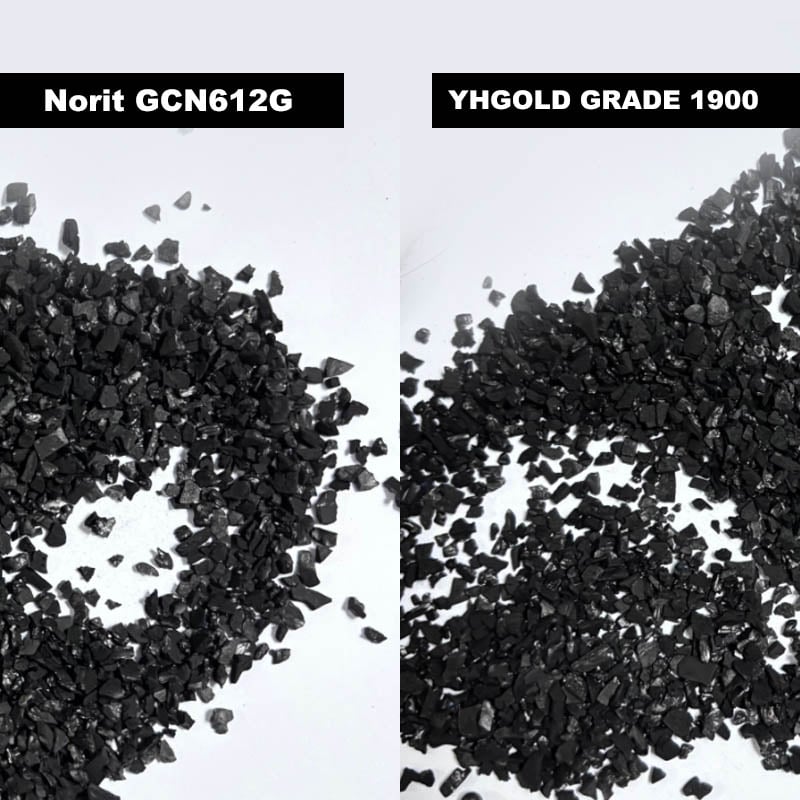
YHGOLD GRADE 1903 et Norit GCN612G charbon de récupération d'or à base de coquille de noix de coco côte à côte — comparaison de la taille des grains, de leur forme et de leur uniformité.
Norit publie des spécifications complètes concernant l'attrition (<1,0 %, test de la bouteille roulante) et les plaquettes (<3,5 %) pour le GCN612G. Une faible attrition réduit les pertes de carbone dans les boucles CIL ; une faible teneur en plaquettes minimise la formation de grains de carbone plats, responsables d'une mauvaise rétention sur le tamis.
Pour le YHGOLD GRADE 1903, les résultats des tests d'attrition en flacon roulant et de teneur en plaquettes sont en cours de validation finale en laboratoire. Au lieu de présenter des valeurs estimées ou extrapolées, nous indiquons que les données sont « en attente ». Seules les données mesurées et validées seront publiées et cet article sera mis à jour dès la finalisation des rapports de laboratoire.
Si ces paramètres constituent des exigences obligatoires pour l'appel d'offres, contactez YH‑Carbon pour connaître les derniers progrès des tests, ou commandez des échantillons correspondants et effectuez des tests en laboratoire indépendants.
Norit (Cabot) est une marque de charbon actif haut de gamme mondialement reconnue. Le prix de ses produits reflète le prestige de la marque à l'international, son réseau d'entreposage mondial, son réseau de distribution à plusieurs niveaux et son infrastructure de support technique éprouvée, autant d'atouts qui apportent une valeur ajoutée concrète à de nombreux exploitants miniers.
YHGOLD GRADE 1903 adopte un positionnement différent sur le marché : des performances métallurgiques comparables à un prix direct usine plus compétitif. Pour les mines consommant des centaines de tonnes de carbone par an, les économies modérées réalisées par tonne se traduisent par une réduction substantielle des coûts totaux d’exploitation, sans compromettre les performances d’adsorption de l’or requises par les circuits CIP/CIL existants.
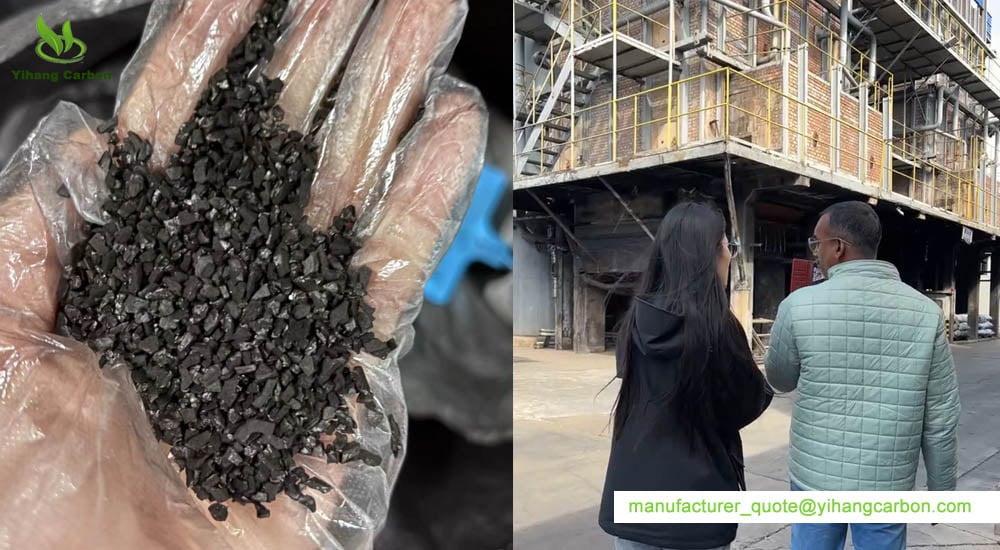
Des échantillons de charbon actif de coque de noix de coco YHGOLD GRADE 1903, destiné à l'extraction de l'or, sont présentés sur place lors des visites de l'usine chez nos clients. Les visites d'acheteurs et les audits indépendants réalisés par des tiers sont les bienvenus.
| Facteur | Norit GCN612G | YHGOLD GRADE 1903 |
|---|---|---|
| Nombre d'iode | Spécification non principale | 1145 mg/g (vérifié par SGS) |
| Teneur en cendres | ≤3,5 % | 2,41 % (vérifié par SGS) |
| Humidité | ≤5 % | 4,7 % (vérifié par SGS) |
| Force / Dureté | ≥99 % (Bac à billes ASTM D3802) | 98,3 % (GB/T, norme de test différente) |
| Valeur K | 29 kg/t | 27‑31 kg/t |
| Valeur R | 60 % | 54‑62 % |
| Usure | <1,0 % | Données en attente |
| Plaquettes | <3,5 % | Données en attente |
| Taille des mailles | 6×12 / 8×16 | 6×12 / 8×16 |
| Positionnement prix | Marques mondiales haut de gamme | Prix compétitifs en direct d'usine |
| Vérification par un tiers | Gestion de la qualité Cabot‑Norit | Certificats d'analyse SGS/Intertek disponibles par lot |
Envisagez YHGOLD GRADE 1903 si vous utilisez actuellement du Norit GCN612G dans des circuits CIP/CIL/CIC, souhaitez réduire votre budget d'exploitation lié au carbone et préférez un remplacement direct sans modification du circuit ni risque pour le rendement de récupération de l'or. Le YHGOLD GRADE 1903 présente une granulométrie identique, des performances K/R similaires, une validation tierce SGS et est conçu pour les exploitations minières soucieuses des coûts.
Continuez avec Norit GCN612G si votre cahier des charges impose explicitement la marque Norit ; ou vos critères d’acceptation métallurgiques exigent des données complètes et publiées sur l’attrition et la granulométrie, données que YHGOLD 1903 n’a pas encore finalisées. L’approvisionnement avec une marque spécifiée et une fiche technique complète sont déterminants pour certains processus d’approvisionnement miniers.
La méthode de référence pour toute comparaison de qualité de carbone reste l'essai de chargement parallèle réalisé avec la pulpe de minerai de votre propre site. Demandez des échantillons de carbone identiques aux deux fournisseurs et effectuez les tests dans des conditions de traitement identiques ; vous obtiendrez ainsi une conclusion définitive sur les performances sur site.
Indiquez-nous votre CTC, vos valeurs K/R cibles et la quantité. Nous vous enverrons une fiche technique, un certificat SGS, une fiche technique et un devis sous 24 heures, ainsi que des échantillons gratuits pour test.
Le charbon actif YHGOLD GRADE 1903 est conçu comme une alternative économique et facile à installer au Norit GCN612G. Ces deux charbons, activés à la vapeur à partir de coques de noix de coco, sont destinés à la récupération de l'or et présentent une granulométrie de 6×12 / 8×16 mesh, avec des plages de performance K et R similaires. Toutefois, avant toute utilisation à grande échelle, il est fortement recommandé de réaliser des tests d'adsorption comparatifs en utilisant votre propre pulpe minière et dans des conditions de fonctionnement identiques.
Une comparaison numérique directe est invalide. La résistance à 98,3 % de l'acier YHGOLD GRADE 1903 est mesurée par la méthode d'essai de compression GB/T ; la dureté ≥ 99 % de l'acier Norit GCN612G est déterminée par l'essai d'abrasion par tribofinition ASTM D3802. Ces deux méthodes évaluent différents modes de défaillance mécanique. Pour une comparaison véritablement équivalente, demandez aux deux fournisseurs de fournir des rapports établis selon une norme d'essai unifiée ou de réaliser des essais d'attrition en interne.
D’après le rapport d’analyse SGS : indice d’iode 1145 mg/g, cendres 2,41 %, humidité 4,7 %, résistance GB/T 98,3 %. Rendement en or : valeur K 27-31 kg/t, valeur R 54-62 %. L’attrition et la teneur en plaquettes sont en cours d’analyse et les données sont indiquées comme étant en attente ; seuls les résultats des analyses effectuées seront publiés.
Le charbon actif issu de coques de noix de coco présente une distribution microporeuse optimale, adaptée à la taille moléculaire du complexe or-cyanure, et combine une résistance mécanique intrinsèque élevée et une teneur en cendres relativement faible. Ces propriétés essentielles permettent une adsorption efficace de Au(CN)₂⁻ et une longue durée de vie dans les cuves CIL/CIP fortement agitées. C’est précisément pour ces raisons que les charbons actifs Norit GCN612G et YHGOLD GRADE 1903 sont fabriqués à partir de coques de noix de coco.
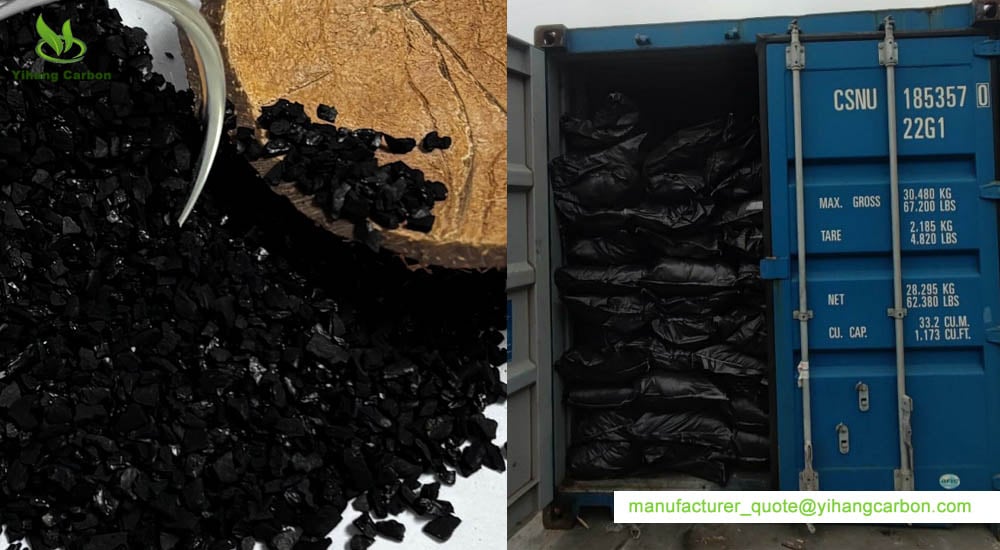
Oui. YH-Carbon fournit du charbon granulaire issu de coquilles de noix de coco pour la récupération de l'or sur les sites miniers du monde entier. Nous proposons une prise en charge complète du transport international, de la documentation d'exportation et de la livraison au port de destination. La marchandise est conditionnée en big bags pour le chargement en conteneur 40'HC, et un certificat d'analyse SGS/Intertek est fourni pour chaque lot.
 EN
EN