Aug 24,2026
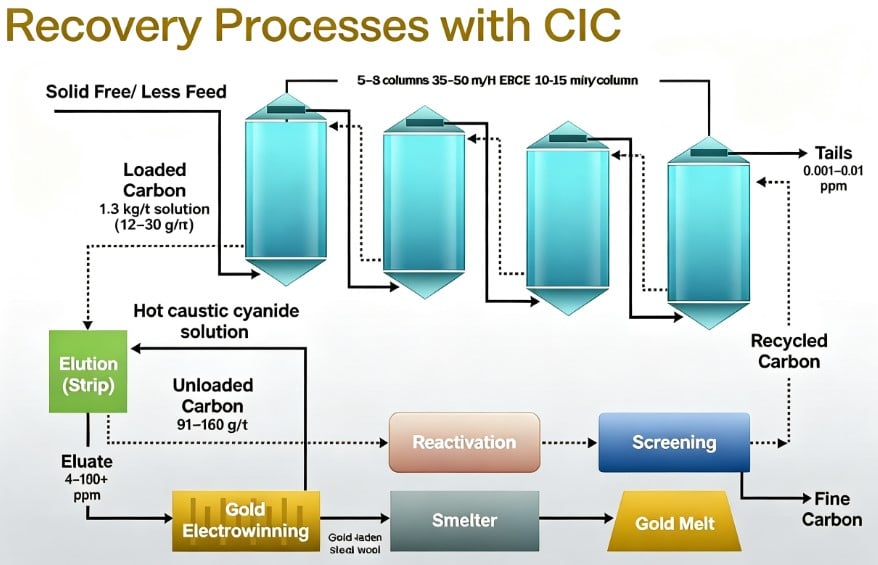
Activated carbon is an indispensable core medium for modern hydrometallurgical gold extraction processes, including Carbon in Column (CIC), Carbon in Pulp (CIP), and Carbon in Leach (CIL). It efficiently adsorbs gold cyanide complexes from ore slurry, which are further desorbed and electrolyzed to produce refined gold. After thermal regeneration, the carbon can be reused repeatedly in mining circuits.
Not all activated carbon grades are suitable for gold recovery. Coconut shell-based granular activated carbon is the universal industry standard for global gold mines. Raw material characteristics, physical durability, and adsorption performance directly determine gold recovery efficiency, carbon attrition loss, soluble gold loss, and overall operational profitability. This article comprehensively analyzes the material advantages, core technical indicators, standard parameters, mainstream manufacturers, pricing, and packaging solutions of gold-grade activated carbon, based on authoritative technical data from Carbon Activated Corporation (CAC).
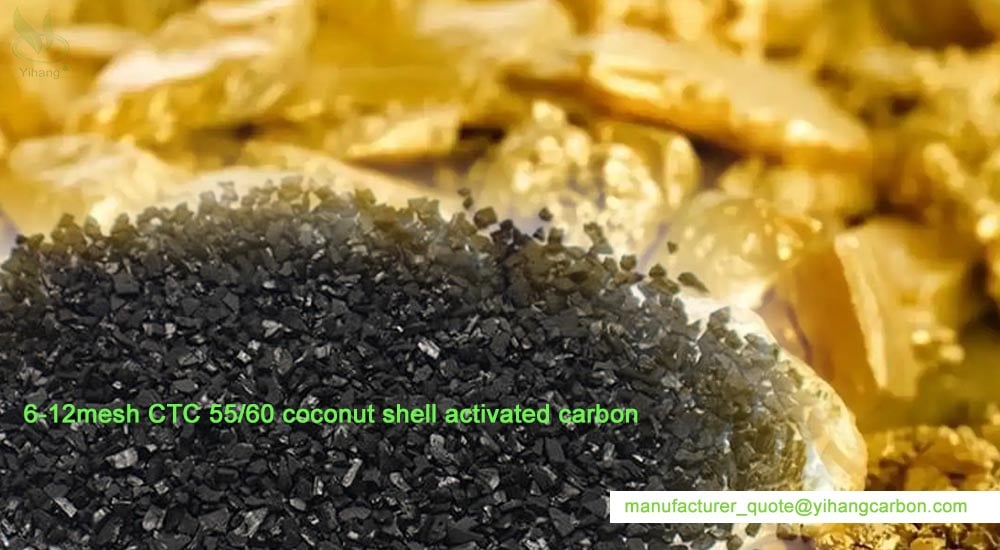
Gold mining carbon operates under extremely harsh working conditions: continuous slurry stirring, pipeline transportation, screen friction, alkaline desorption, and repeated high-temperature regeneration. Coal-based and wood-based activated carbon cannot withstand such rigorous long-term operation, making coconut shell carbon the only cost-effective and reliable option for precious metal recovery.
Superior Mechanical Hardness & Low Attrition Loss
Coconut shell features a dense natural fiber structure, endowing finished carbon with a ball-pan hardness above 98% and an attrition rate of less than 1%. In CIP/CIL processing systems, low-hardness carbon breaks easily and forms fine carbon powder. The gold adsorbed on fine powder will be lost with tailings, causing irreversible economic losses. High-quality coconut shell carbon minimizes fine particle generation, avoids screen pegging and blinding, and reduces head loss in the adsorption circuit.
Optimized Micropore Structure for Gold Cyanide Adsorption
Gold cyanide complexes are tiny molecular substances that rely on developed micropores for efficient adsorption. Coconut shell carbon has concentrated micropore distribution (1–2 nm), delivering fast adsorption kinetics and high gold loading capacity. In contrast, coal-based carbon is dominated by mesopores and macropores, resulting in lower gold adsorption efficiency.
Additionally, premium coconut shell carbon provides excellent resistance to preg robbing, effectively preventing dissolved gold from being re-adsorbed by organic matter in complex ores, which is critical for high-grade and refractory gold ore processing.
Low Impurity & Stable Regeneration Performance
Coconut shell raw materials contain minimal inorganic impurities, with low ash content after professional processing. It avoids micropore blockage caused by impurities, maintains stable adsorption efficiency, and produces low-impurity gold mud for simpler subsequent gold refining procedures.
Moreover, coconut shell carbon retains stable physical and chemical properties after multiple thermal regeneration cycles, with negligible performance deterioration. It has a longer service life and lower replacement frequency than coal or wood-based carbon, significantly reducing long-term mine operating costs.
1 Iodine Value (1050IV / 1100IV / 1200IV)
Iodine value reflects the micropore development degree and specific surface area of activated carbon, serving as a fundamental adsorption performance indicator:
Note: Iodine value cannot be used as a single evaluation standard. High iodine value carbon with poor hardness and CTC performance will lead to actual low gold recovery efficiency.
2 Hardness
Hardness is the most critical safety indicator for gold mining carbon. Industrial premium standards require a hardness of ≥98%, and top-grade products reach up to 99%. High hardness ensures low attrition rate (<1%), effectively preventing carbon fragmentation and gold loss caused by mechanical friction in continuous production. CAC’s COC-G50 and COC-G60 maintain ultra-low attrition performance for long-cycle mining operation.
3 CTC (Carbon Tetrachloride Adsorption Rate)
CTC represents the overall adsorption activity and gold loading capacity of activated carbon, which is positively correlated with gold recovery efficiency:
Higher CTC value means stronger unit carbon gold adsorption capacity, improving mine processing efficiency and unit output profit.
4 Moisture Content
The standard factory moisture of gold-grade activated carbon is ≤5%. Excessive moisture increases invalid transportation weight and reduces effective carbon content. Although moisture does not affect inherent adsorption performance, it must be deducted during factory inspection and quality acceptance to calculate dry-based technical indicators.
5 Ash Content
Premium coconut shell carbon for gold recovery controls ash content within 3–4%. High ash content will block carbon micropores, slow down adsorption kinetics, and introduce impurities into gold mud, increasing the difficulty and cost of subsequent precious metal refining.
6 Particle Mesh Size & Operational Impact
The mainstream mesh specifications for gold mining carbon are 6×12, 6×16, and 8×16 mesh, with distinct application scenarios:
Excessively coarse particles slow down adsorption kinetics and extend processing cycles; excessively fine particles cause severe carbon loss and screen failure. Qualified gold carbon also controls platelet content below 1% to avoid fragmentary particle breakage.
Tell us your required specifications, including iodine value range, CTC value, and preferred packaging type. We will offer you a factory‑direct price, send a free sample for validation, and supply a COA on every batch.
1 CAC Official Gold-Grade Carbon Parameters
|
Product Name |
Raw Material |
CTC |
Surface Area |
Density |
Hardness |
|
COC-G50 |
Coconut Shell Based |
50–55% |
1000–1100 m²/g |
50–52 g/cc |
≥99% |
|
COC-G60 |
Coconut Shell Based |
60–65% |
1100–1200 m²/g |
48–50 g/cc |
≥99% |
|
Product Name |
Mesh Size |
Attrition Rate |
Platelet Content |
Adsorption Kinetics |
Au Loading |
|
COC-G50 |
6×12, 6×16, 8×16 |
<1% |
<1.0% |
50–55% |
26–28 Kg Au/T |
|
COC-G60 |
6×12, 6×16, 8×16 |
<1% |
<1.0% |
55–60% |
28–33 Kg Au/T |
2 Industry Universal Grading Standards
|
Technical Index |
Standard Grade |
Premium Grade |
Ultra-High Grade |
|
Iodine Value |
1000–1050 mg/g |
1050–1100 mg/g |
1100–1200 mg/g |
|
CTC |
≥50% |
≥55% |
≥60% |
|
Hardness |
≥98% |
≥98.5% |
≥99% |
|
Attrition Rate |
≤2% |
≤1.5% |
≤1% |
|
Ash Content |
≤4% |
≤3% |
≤2.5% |
|
Moisture |
≤5% |
≤5% |
≤4% |
The price of gold-grade activated carbon varies significantly based on iodine value, CTC grade, hardness, raw material quality, order quantity, and shipping distance. Mining enterprises should evaluate full lifecycle cost rather than unit price only.
Low-cost low-hardness carbon will cause massive gold loss and frequent carbon replacement, resulting in higher comprehensive operating costs for mines.
1 International Famous Brands
2 Domestic Premium Chinese Manufacturers
7. Packaging & Customization Service
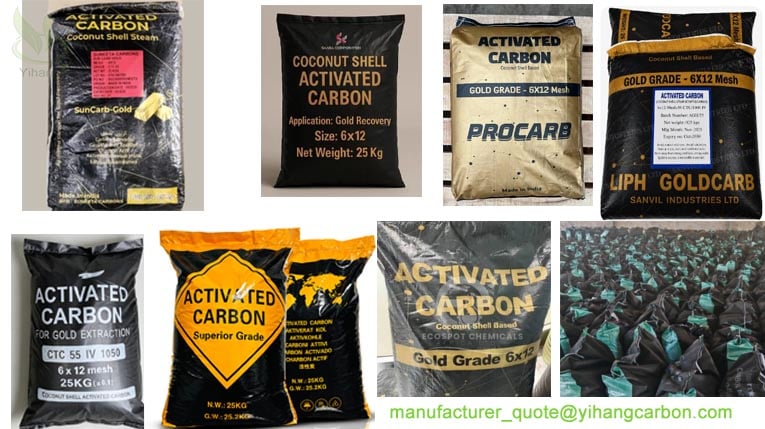
All mainstream gold activated carbon suppliers support standardized packaging and personalized OEM customization to meet international mining project and export requirements.
1 Standard Packaging
2 Custom Brand Packaging
Brands including Jacobi and Hainan Xingguang support full customization: custom LOGO, project name, technical parameter labels, and moisture-proof inner lining. Custom packaging meets international export customs clearance standards and mine warehouse management specifications, which is widely favored by overseas mining investors.
8. Conclusion
High-efficiency gold recovery relies on coconut shell-based activated carbon with balanced performance. Hardness and low attrition are the core guarantees to avoid gold loss; iodine value and CTC determine adsorption capacity and production efficiency; reasonable particle size matching ensures stable circuit operation.
For global gold mining enterprises, selecting graded professional gold recovery carbon according to ore characteristics and production processes is the key to improving gold recovery rate, reducing comprehensive operating costs, and maximizing mining economic benefits.
 EN
EN