The global water shortage is worsening, and seawater desalination has become the core solution for ensuring water supply for daily life and industrial use in drought-stricken coastal countries. Reverse osmosis membranes are the core equipment of the desalination system, but residual chlorine, natural organic matter, and algal colloids in seawater are prone to cause membrane oxidation and biological fouling, significantly increasing the operation and maintenance costs. Activated carbon, as the core filter material for pre-treatment and post-treatment, can protect the reverse osmosis membrane from the root cause and stabilize the water quality of the produced water. It is an indispensable key consumable in modern seawater desalination plants. This article comprehensively analyzes the application scheme of seawater desalination-specific activated carbon based on the current industry situation, process principles, product selection, and implementation cases.
Global Status of Seawater Desalination
Freshwater scarcity has become a severe global challenge driven by population expansion, industrial development and climate change. Seawater desalination is recognized as one of the most reliable long-term solutions to supplement municipal and industrial water supply worldwide.
The Middle East stands as the world’s largest desalination market, where arid coastal nations rely heavily on large-scale desalination plants to meet daily residential and factory water demand. Regions including Southeast Asia, North Africa and Southern Europe are also rapidly expanding desalination infrastructure year by year.
However, traditional desalination systems face persistent pain points: organic pollutants, residual chlorine, oil impurities and algae metabolites in raw seawater easily foul and damage expensive reverse osmosis (RO) membranes, raising maintenance costs, cutting membrane service life and lowering overall water production efficiency. High operation expenditure has always restricted the economic performance of desalination facilities, which makes high-performance specialized activated carbon an indispensable pretreatment material for modern desalination lines.
Working Principle & Process of Seawater Desalination Systems
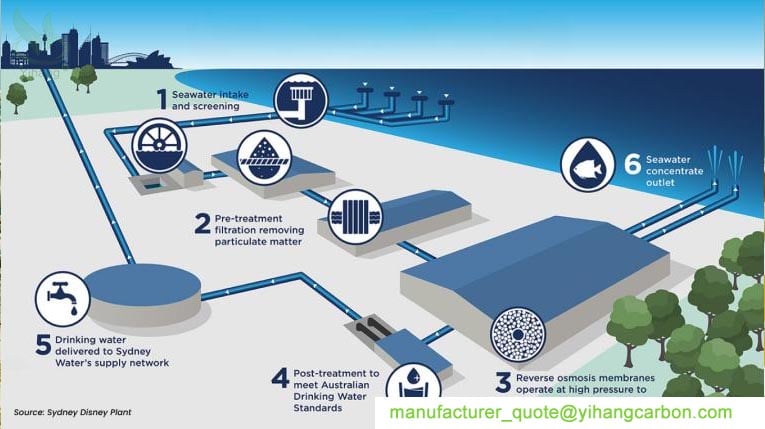
Most commercial large-scale seawater desalination plants adopt reverse osmosis (RO) technology, with a complete production flow divided into 4 core stages:
- Raw Seawater Intake: Extract seawater from coastal pipelines, containing suspended solids, marine organisms, humus, trace oil and halogen substances.
- Pretreatment Stage: The critical filtering link. Sediment tanks, filter bags and activated carbon filters remove organic contaminants, residual chlorine and odorous compounds to protect downstream RO membranes.
- Reverse Osmosis Filtration: High pressure pushes seawater through semi-permeable RO membranes to separate salt ions from freshwater. This is the core desalination step, and membrane integrity directly determines plant running costs.
- Post-Treatment & Water Output: Adjust water pH value, add mineral elements for drinking standards, then deliver finished freshwater to urban pipe networks or industrial production lines.
Without activated carbon pretreatment, corrosive and organic contaminants will continuously erode RO membranes, causing frequent membrane replacement and unplanned plant shutdowns.
Core Functions of Activated Carbon in Desalination Lines
Specialized activated carbon is installed in the pretreatment filter tank, undertaking multiple protective and purification tasks for the whole system:
- Residual Chlorine Removal: Eliminate free chlorine in seawater, preventing chlorine oxidation and irreversible damage to RO membrane materials.
- Organic Adsorption: Absorb humic acid, algae secretions, trace petroleum pollutants and dissolved organic matter (DOM) that cause membrane fouling.
- Odor & Color Elimination: Remove marine odor, yellowish discoloration and volatile organic compounds to improve finished water taste and appearance.
- Heavy Metal Trace Capture: Adsorb low-concentration heavy metal ions in coastal seawater to meet safe drinking water standards.
- Reduce Membrane Maintenance Frequency: Minimize organic scaling on RO membrane surfaces, extend membrane service cycle and stabilize long-term water yield efficiency.
What are the advantages of the special activated carbon used for seawater desalination and what are the conventional indicators?
- High seawater corrosion resistance: Stable physical structure under high salinity seawater environment, no powder collapse during long-term continuous water washing.
- Ultra-high iodine value & methylene blue adsorption capacity: Superior adsorption performance targeting marine organic pollutants.
- Low ash & low soluble impurity content: Will not release extra suspended substances into seawater to cause secondary membrane pollution.
- Strong wear resistance: Less carbon dust generation during fluidization in filter tanks, reducing subsequent fine filtration burden.
- Stable PH adaptability: Works efficiently within the full PH range of raw seawater without performance attenuation.
Standard Key Performance Indicators
| Test Item |
Standard Parameter |
| Iodine Adsorption Value |
≥1000 mg/g |
| Methylene Blue Adsorption Value |
≥180 mg/g |
| Moisture Content |
≤5% |
| Ash Content |
≤4% |
| Hardness / Abrasion Resistance |
≥95% |
| Chlorine Removal Rate |
≥99% |
| Particle Size |
Customizable 8×30 / 12×40 mesh coconut shell carbon |
Exclusive Strengths of Yihang Custom Activated Carbon for Seawater Desalination
Yihang Carbon has focused on customized coconut shell activated carbon for large desalination plants for over a decade, with exclusive technical edges unmatched by ordinary carbon suppliers:
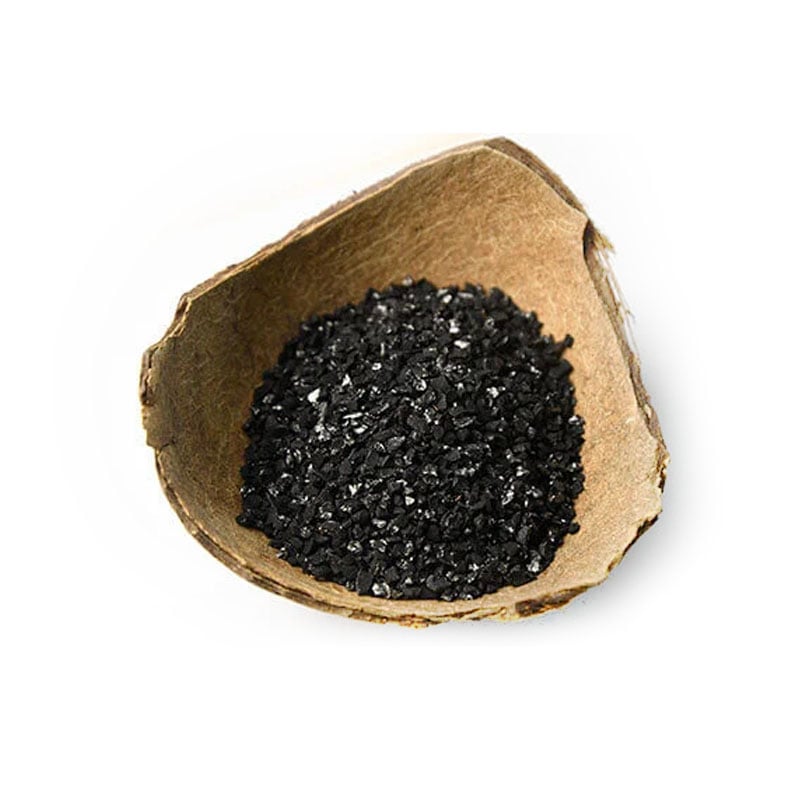
- Premium Coconut Shell Raw Material Base: Adopt high-density tropical coconut shells as raw materials, delivering higher adsorption capacity than coal-based carbon for marine organics.
- Special Activation Process for High-Salinity Water: Secondary high-temperature steam activation technology creates developed micropore structure, optimized to adsorb seawater-specific pollutants.
- Low Dust & High Hardness Formulation: Custom calcination process cuts carbon powder outflow by over 60%, drastically lowering post-filter clogging risk.
- Strict Low-Soluble Impurity Control: Independent laboratory full detection of soluble organics and metal ions, fully compliant with international desalination water treatment standards.
- Customizable Production Support: Adjustable particle size, adsorption index and packaging solutions to match small pilot plants and million-ton-level large desalination projects.
- Stable Mass Supply Capacity: Large automated production lines support bulk annual orders from Middle East coastal desalination bases, with on-time global container delivery guarantee.
- Professional Engineering Technical Team: Provide free pre-sales water sample testing, filter tank loading scheme design and after-sales usage guidance for overseas factories.
Yihang Carbon Overseas Desalination Plant Project Cases
Yihang’s desalination-grade coconut shell activated carbon has maintained long-term stable supply cooperation with mainstream desalination manufacturers in the Middle East, with two landmark bulk procurement projects:
- Large-Scale Desalination Plant in Saudi Arabia This coastal facility supplies domestic freshwater for millions of residents. The plant signs an annual fixed procurement contract of 320 tons of Yihang coconut shell activated carbon for pretreatment filtration systems. Regular quarterly container shipments ensure uninterrupted plant operation all year round. After switching to Yihang carbon, the factory extended RO membrane replacement cycle by 35% and cut annual membrane maintenance expenditure significantly.
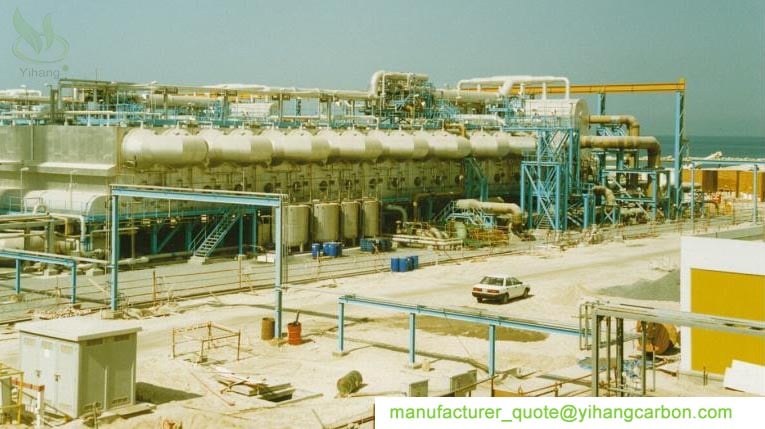
- Desalination Complex in the United Arab Emirates The integrated plant serves both municipal water supply and local industrial parks, with an annual fixed purchase volume of 200 tons Yihang specialized desalination activated carbon. The customer praised Yihang carbon’s ultra-low dust characteristic, which greatly reduced their fine filter cleaning frequency and improved continuous water production stability.
Both projects have renewed cooperation contracts for consecutive years, fully verifying the stable performance and economic value of Yihang activated carbon under long-term high-salinity working conditions.
How to Select Desalination Activated Carbon & Evaluate Suppliers, Purchasing Tips
Judge Activated Carbon Quality
- Check core adsorption indicators: Iodine value below 900 mg/g is unsuitable for desalination pretreatment; qualified products must reach ≥1000mg/g iodine value.
- Test abrasion hardness: Shake carbon particles in a sealed bottle violently. Excessive fine powder indicates poor hardness, which will block downstream filters and membranes.
- Inspect ash content: High ash carbon will release mineral impurities into seawater, accelerating membrane fouling. Choose products with ash content ≤4%.
- Request lab test reports: Formal suppliers must provide full third-party inspection certificates covering all key indicators for each batch.
- On-site trial test: For large orders, arrange a small trial shipment to run in the pretreatment tank, observe chlorine removal efficiency and membrane fouling status within 1–2 weeks.
How to Screen Reliable Activated Carbon Suppliers?
- Professional segmentation capability: Prioritize manufacturers with mature desalination carbon R&D, rather than general multi-purpose carbon factories without seawater adaptation experience.
- Overseas bulk project track record: Verify real Middle East desalination plant cooperation cases to confirm stable large-order delivery ability.
- Independent laboratory & full testing capacity: Avoid trading companies without self-production and inspection equipment.
- Global logistics experience: Confirm the supplier has rich container export experience to Middle East, Africa and Europe, familiar with sea freight, customs clearance and product export certifications.
- Technical after-sales service: Choose suppliers that can offer water sample analysis, filter filling design and on-demand technical support, instead of pure product resellers.
Key Purchasing Guidelines
- Confirm particle size matching your filter tank: Granular coconut carbon 12×40 mesh suits small and medium plants; 8×30 mesh is preferred for large-scale industrial desalination lines.
- Clarify annual consumption budget: Sign annual framework contracts for fixed bulk demand to lock unit price and shorten delivery lead time.
- Packaging confirmation: Standard 25kg woven bags with inner plastic liners; customized bulk jumbo bags available for large factories to reduce unloading labor cost.
- Batch inspection clause: Add third-party testing acceptance terms in sales contracts; reject unqualified batches free of extra logistics cost.
- Storage reminder during transportation: Activated carbon shall be kept sealed and dry during sea transit to prevent moisture absorption that damages adsorption performance.
Frequently Asked Questions About Activated Carbon for Seawater Desalination
Q1: Can coal-based activated carbon replace coconut shell carbon for desalination pretreatment?
A: Not recommended. Coconut shell carbon develops richer micropores, with far better adsorption efficiency for marine organic pollutants. Coal-based carbon has higher ash content and more dust output, easily causing rapid RO membrane fouling under high-salinity seawater.
Q2: How long is the service cycle of activated carbon in desalination filter tanks?
A: Normally 6–12 months, depending on raw seawater pollution level. Yihang high-index desalination carbon can extend service life by 20–30% compared with ordinary activated carbon. Backwashing every 7–15 days can further prolong usable time.
Q3: Is activated carbon reusable after saturation?
A: Saturated carbon can be sent to professional factories for thermal regeneration. Yihang also provides carbon regeneration technical consultation for large desalination plants to lower long-term procurement cost.
Q4: Will activated carbon change the salt concentration of seawater?
A: No. Activated carbon only adsorbs organic matter, chlorine and trace contaminants; it does not absorb sodium chloride salt ions, so the desalination load of RO membranes will not be affected.
Q5: What certifications does Yihang desalination activated carbon hold for overseas export?
A: All batches come with MSDS, factory inspection COA, food-grade water treatment certification and full export customs documents, meeting import standards of Saudi Arabia, UAE, Oman, Egypt and other coastal desalination countries.
Q6: Can Yihang adjust carbon indicators for special polluted seawater?
A: Yes. Our technical team adjusts activation production parameters according to customers’ raw seawater test reports, customizing high-chlorine resistance or super high-adsorption activated carbon solutions.
 EN
EN