Aug 10,2026
Deionized (DI) water is widely used in industries where high-purity water is essential. Electronics manufacturing, pharmaceuticals, laboratories, power plants, food and beverage production, and precision cleaning all rely on deionized water to ensure product quality and process stability.
While ion exchange resins are responsible for removing dissolved ions, activated carbon plays an equally important role in protecting the entire deionization system and improving overall water quality. By efficiently removing chlorine, chloramine, organic contaminants, odors, and oxidizing substances, activated carbon helps extend resin life and ensures the production of consistently high-quality DI water.
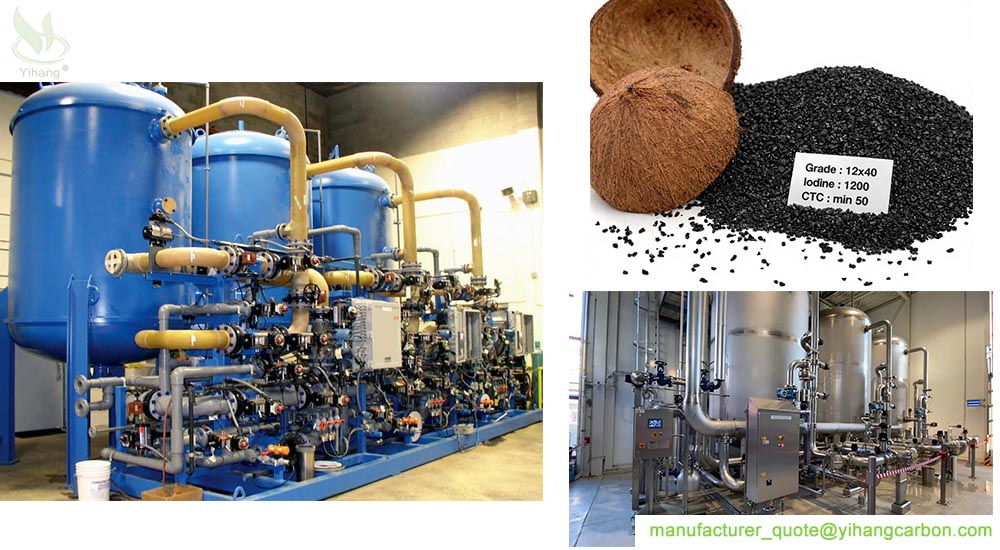
A deionization system is designed to remove charged ions from water, but ion exchange resins are sensitive to oxidants and organic contamination. If untreated municipal or groundwater enters the DI system directly, free chlorine, chloramines, natural organic matter (NOM), pesticides, solvents, and other impurities can rapidly degrade the resin, reducing its exchange capacity and increasing operating costs.
Installing an activated carbon filter before the ion exchange unit significantly improves pretreatment efficiency by removing contaminants that resins cannot effectively eliminate.
The primary functions of activated carbon in DI water systems include:
In many industrial water treatment plants, activated carbon is considered a standard pretreatment step before reverse osmosis (RO) and deionization equipment.
Activated carbon is commonly used in deionized water production for:
Semiconductor and electronics manufacturing
Pharmaceutical purified water systems
Laboratory ultrapure water production
Battery manufacturing
Cosmetic production
Precision metal cleaning
Boiler feed water preparation
Chemical processing plants
These industries require extremely low conductivity water while maintaining stable system performance over long operating periods.
Activated carbon contains millions of microscopic pores that create an exceptionally large internal surface area. Through physical adsorption and catalytic reactions, contaminants are captured inside these pores or chemically reduced on the carbon surface.
For deionized water pretreatment, activated carbon mainly removes:
Free Chlorine
Chlorine is rapidly reduced into harmless chloride ions, preventing oxidation of ion exchange resins.
Chloramines
Catalytic activated carbon effectively decomposes chloramines, which are more difficult to remove than free chlorine and are commonly used in municipal water disinfection.
Organic Matter
Natural organic compounds, industrial chemicals, pesticides, phenols, and volatile organic compounds are adsorbed onto the carbon surface, reducing total organic carbon (TOC) levels entering the DI system.
Taste and Odor Compounds
Activated carbon removes residual odors caused by organic substances or disinfectants, improving overall water quality.
Several activated carbon materials are available for DI water pretreatment, each with different performance characteristics.
Coconut Shell Activated Carbon
Coconut shell activated carbon is generally regarded as the preferred choice for deionized water systems because of its high hardness, low ash content, excellent mechanical strength, and abundant micropore structure.
Its advantages include:
Coal-Based Activated Carbon
Coal-based activated carbon provides a balanced pore structure containing both micropores and mesopores, making it effective for removing larger organic molecules while maintaining good adsorption capacity.
It is often selected for industrial water treatment systems with relatively high organic loads.
|
Parameter |
Recommended Value |
|
Raw Material |
Coconut Shell |
|
Particle Size |
12×40 Mesh or 8×30 Mesh |
|
Iodine Number |
≥1000 mg/g |
|
Hardness |
≥98% |
|
Moisture |
≤5% |
|
Ash Content |
≤4% |
|
Bulk Density |
Approximately 480–550 kg/m³ |
|
pH |
8–10 (or according to system requirements) |
When selecting activated carbon for deionized water purification, the following specifications are commonly recommended:
The exact specifications should be selected according to the feed water quality, chlorine concentration, flow rate, and required service life.
A typical industrial deionized water treatment process is:
Raw Water → Multimedia Filter → Activated Carbon Filter → Water Softener (if required) → Reverse Osmosis → Ion Exchange (DI) → UV Sterilization → Storage Tank → Point of Use
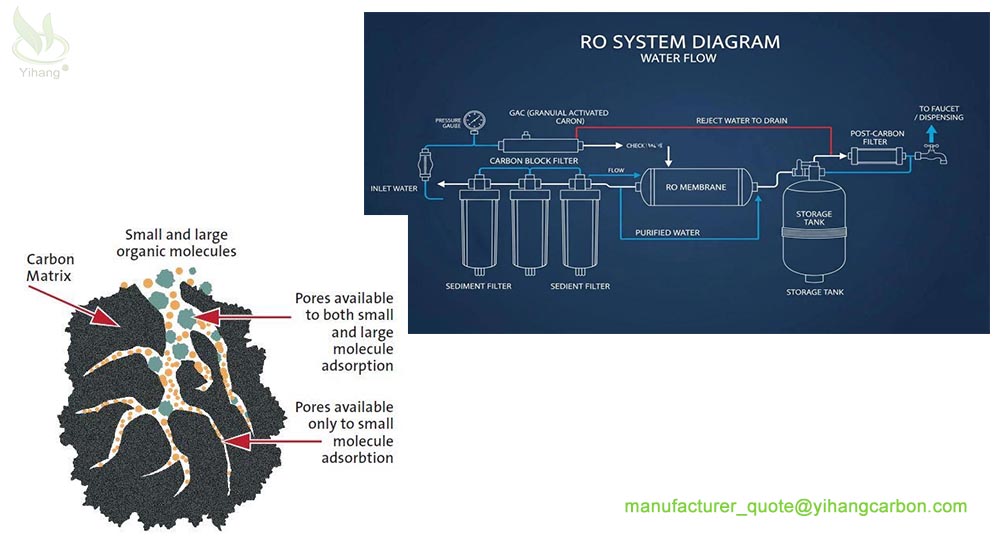
In this configuration, activated carbon serves as a critical protective barrier, ensuring that oxidants and organic contaminants are removed before reaching sensitive downstream equipment.
Factors Affecting Activated Carbon Performance
Several operating conditions influence adsorption efficiency:
Regular monitoring of chlorine breakthrough and pressure drop helps determine the optimal replacement schedule for activated carbon.
For high-purity water applications, consistent product quality is essential. A reliable activated carbon supplier should provide:
Selecting premium activated carbon not only improves water quality but also reduces maintenance costs, extends resin life, and enhances the overall efficiency of the deionized water system.
Activated carbon is a key component in modern deionized water purification systems. Although ion exchange resins remove dissolved ions, activated carbon protects these resins by eliminating chlorine, chloramines, and organic contaminants before they enter the DI unit. High-quality coconut shell activated carbon, with its excellent adsorption capacity, high mechanical strength, and long service life, remains the preferred choice for producing stable, high-purity deionized water across a wide range of industrial applications.
Whether your system is used in electronics manufacturing, pharmaceuticals, laboratories, or industrial process water, selecting the appropriate activated carbon can significantly improve operational reliability while lowering long-term operating costs.
 EN
EN